












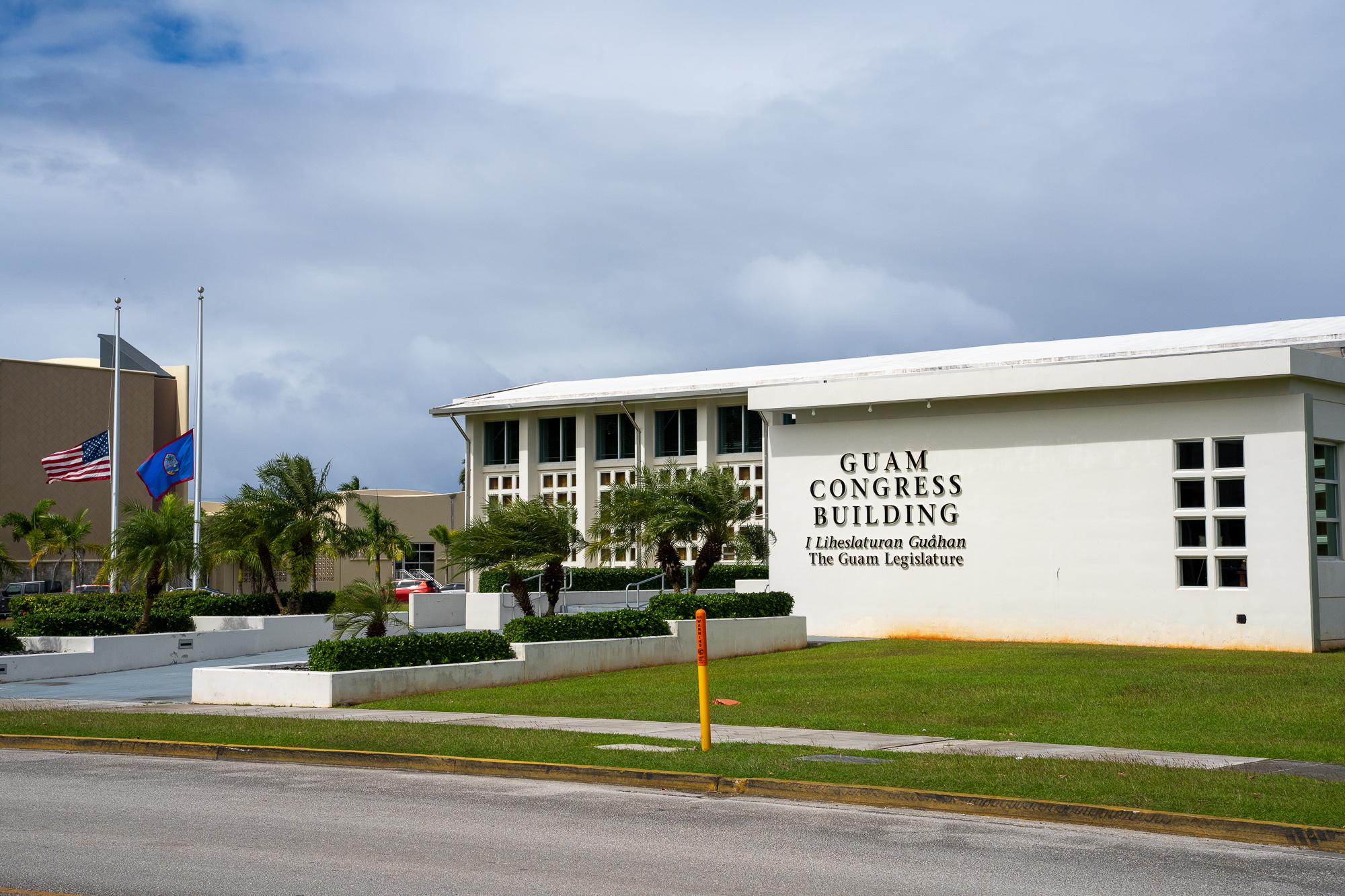
The 38th Guam Legislature passed a $1.42 billion executive spending plan for fiscal 2027 in a 13 to two vote on Aug. 18, clearing the path to roll back the island’s Business Privilege Tax to 4% while maintaining higher assessment rates on defense construction projects.
The measure, designated as Bill No.1 (10-S), makes appropriations for the executive, legislative, and judicial branches for the fiscal period ending Sept. 30, 2027. The floor vote represents a pivotal compromise between lawmakers and the executive branch following weeks of intense debate over government revenue projections, cost-of-living adjustments, and essential public services.
Under the provisions of the bill, the Business Privilege Tax will decrease from 4.5% to 4% effective Oct. 1, 2026. However, lawmakers opted to preserve the 5% BPT rate on prime military buildup construction contracts, ensuring that federal defense spending continues to yield substantial local tax revenue.
Sen. Telo Taitague spoke in support of keeping the military rate intact to offset local impacts. "As the general BPT drops to 4% on October 1st, we should not give away legitimate revenue while billions in federal construction dollars flow through Guam," she said during floor remarks. "Our people carry the impact on the high cost of housing, roads, and utilities."
The executive spending framework incorporates $18 million in additional funding targeted toward strengthening frontline executive branch operations. Under the legislative distribution, $4.5 million is designated for the Guam Behavioral Health and Wellness Center, while $3.9 million each is directed to the Department of Corrections and the Department of Public Health and Social Services.
Further agency allocations include $1.8 million for the Department of Integrated Services for Individuals with Disabilities, $1.5 million for the Guam Police Department, $1.4 million for the Guam Fire Department, and $832,000 for the Department of Youth Affairs.
To address an anticipated shortfall heading into fiscal year 2027, lawmakers approved shifting $7.6 million from unobligated fiscal 2026 excess revenues to cover childcare subsidies.
Healthcare funding remains a major focus of the budget package. Although Guam Memorial Hospital is slated to receive approximately $57 million in primary funding for fiscal 2027, hospital administration previously cautioned senators that the sum falls roughly $21 million short of projected operational costs.
To mitigate the deficit, the approved bill mandates that the first $21 million in excess general fund collections generated throughout fiscal year 2027 be funneled directly to the medical facility.
Additionally, the measure establishes a permanent fiscal cushion by directing all remaining unobligated excess tax and fee collections from fiscal 2026 into the island's Rainy Day Fund to safeguard government operations against unexpected economic disruptions.
Sen. Eulogio Shawn Gumataotao defended the perspective on tax policy during floor deliberations. "Businesses don't pay taxes, people pay taxes," Gumataotao said. "Working moms and dads pay taxes, and individuals who invest their hard-earned savings to start up a business pay taxes."
Sen. Christopher Dueñas, argued that circulating capital in the private sector directly sustains government revenue, saying that "putting more money in our economy will give money to businesses, which is how we derive our taxes." The two dissenting votes came from lawmakers who argued that reducing tax collections reduces the government's capacity to respond to public health and public safety emergencies.
Sen. William Parkinson voiced strong opposition to the BPT reduction, warning that shrinking the tax base leaves critical agencies underfunded. "I firmly believe it is in the bad long-term health of this government for us to be cutting off our long-term revenues permanently when there is a cost-of-living crisis," Parkinson said. "We are turning right around and giving that money to the biggest of the biggest businesses."
The bill now moves to the executive branch for final action before the start of the new fiscal year. mbj