Sinlaku exposes fragile NMI supply chains already strained before super typhoon
BY MARK RABAGO
Saipan Correspondent
Even before Super Typhoon Sinlaku battered the Northern Mariana Islands and disrupted fragile supply chains, businesses across the islands were already struggling with rising costs of doing business, especially with surging fuel and utility charges, worker shortages, and the general difficulty of obtaining imported products, not to mention shipping delays due to competition with the enormous tonnage of disaster aid coming to the islands.
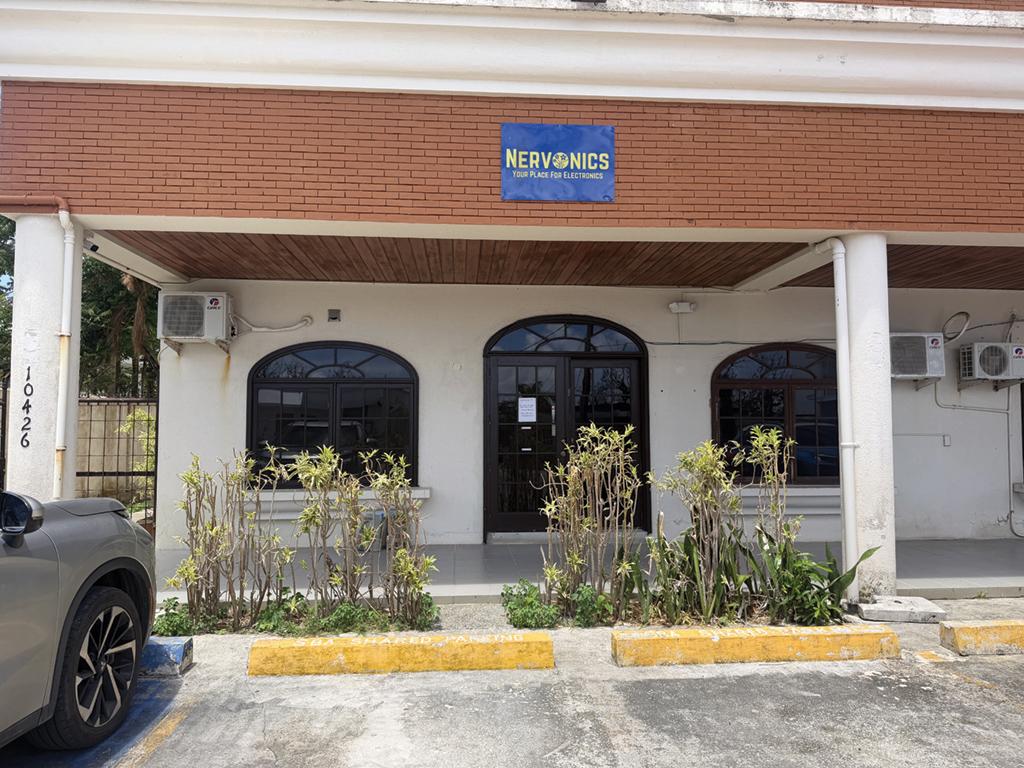
GARAPAN, Saipan — Shipping changes in the aftermath of Super Typhoon Sinlaku have become both a lifeline and a burden for Garapan electronics shop Nervonics, with the business now paying more for faster and more reliable cargo movement even as product shortages and rising costs continue to squeeze operations.
HeiphetzFor Nervonics President Mark Heiphetz, the new reality has forced difficult decisions on inventory, staffing, and pricing while demand remains unpredictable after the storm.
“In most product categories we're now paying for faster and more reliable shipping, which also means more expensive shipping,” Heiphetz told the Journal. “The hardest part has been deciding the quantities for orders, demand has been shifting rapidly since the storm.”
He said the operational strain has been especially difficult for small businesses already dealing with limited manpower and rising wholesale prices.
“The biggest challenge has been the workload. We're a two-person business, so meeting demand at the shop while handling all the behind-the-scenes work has meant extremely long hours.”
He added that the company had other challenges. “On top of that, we had to finance large orders back in April with limited capital available, manage the complexities of large-scale pre-orders, and keep up with prices that are rapidly increasing on most of what we sell,” Heiphetz said. He said the company’s immediate solution is eventually bringing in outside help once operations stabilize enough to allow training of new employees.
Even before Sinlaku, however, Nervonics was already dealing with mounting industry-wide supply issues, particularly shortages involving RAM and digital storage products.
They were “driving foot traffic to the store and fighting the general price increases across the tech world driven by the RAM and storage shortage,” Heiphetz said. While tariffs have affected costs, he said broader global supply shortages have had a bigger impact on the technology sector. “Tariffs have an impact on prices, but honestly, the bigger force in our sector has been the aforementioned RAM and storage shortage.”
So far, he said the company has managed to avoid raising prices despite worsening market conditions after Sinlaku, though Heiphetz acknowledged that may not be sustainable indefinitely.
“We've been able to hold off on raising prices since the typhoon so far, though eventually market conditions may force adjustments on certain products. We're holding the line where we can.” That position may not be sustainable indefinitely, he said.
Nervonics attempted to stockpile vulnerable products before conditions worsened, but demand after the typhoon quickly depleted much of that inventory.
“We did our best to stock up on the items most affected by current market conditions before the worst of it hit, but with post-Sinlaku demand, that stockpile won't last nearly as long as we'd hoped,” Heiphetz said. Some items may eventually disappear from store shelves entirely because replacement costs have become too high for the local market, he added.
“In some cases, products are simply harder to get. In others, the reality is that we'll have to stop carrying certain products altogether, because there'd be few or no customers willing or able to pay the new price.” Customer reaction has largely been surprise, Heiphetz said, as many consumers are only now beginning to understand the overlapping economic pressures affecting businesses. “People don't always realize how much going on all at once, so a lot of what we do is just explaining the ‘why’ to customers.”
Despite the challenges, Heiphetz said Nervonics considers itself fortunate compared to other businesses that sustained direct storm damage. “We were lucky enough to be almost entirely spared by the direct damage of the storm,” he said.
“We're a relatively young business, and we’ve been leaning into the resilience products the island needs right now, so in that sense the demand has given us a reason to keep growing.” Before the super typhoon, Nervonics’ bestsellers were iPads, laptops, and monitors, but after Sinlaku it has shifted to solar generators, power banks, solar panels, cables, and electronic bricks. Nervonics is also preparing a community outreach initiative aimed at residents still struggling with prolonged outages after Sinlaku. “We're working to provide a free, solar-powered mobile charging station for folks still dealing with having no power,” Heiphetz said. “We hope to launch it soon.” SAN JOSE, Tinian — In the aftermath of the storm, longstanding problems have and operational challenges have worsened, with businesses on Tinian in particular facing mounting fuel costs, limited access to generators and supplies, and continued instability in power and internet service.
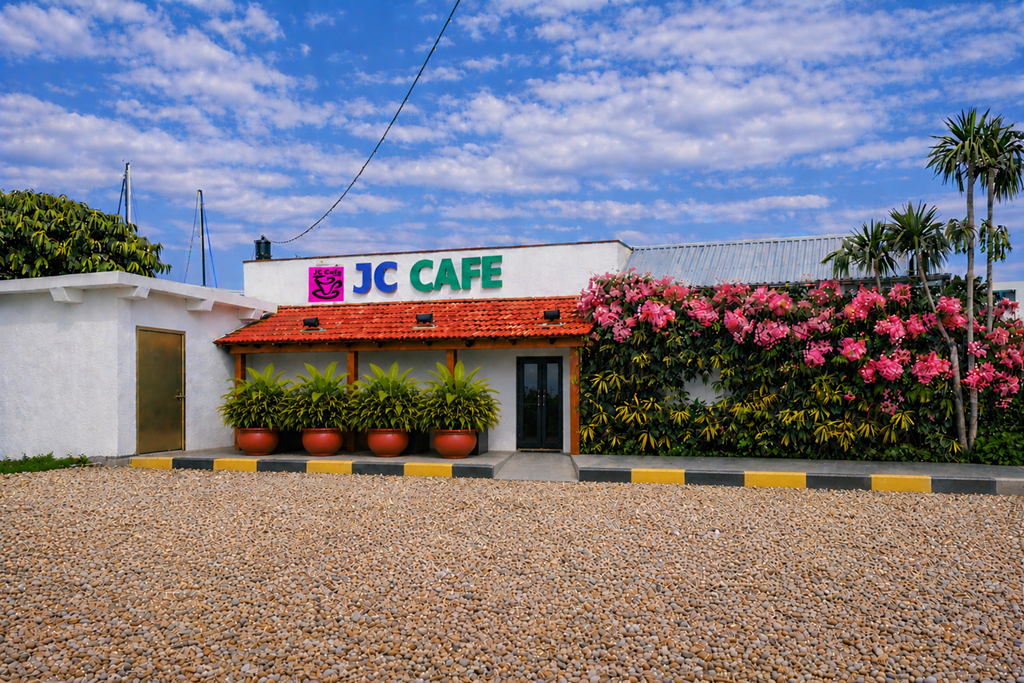
Operators from JC Café and Ushio Fabrica LLC told the Journal that while these challenges existed even before Sinlaku the typhoon exposed just how vulnerable island businesses remain.
JC Café owner Neal Eisgrou said one of the biggest immediate post-typhoon issues was the lack of available generators throughout the NMI. “After Typhoon Sinlaku, there were no generators available anywhere in the CNMI,” Eisgrou said, adding that each island should maintain an emergency stockpile of generators that could be loaned out immediately after disasters.
The business owner said JC Café currently operates a 100-kilowatt generator for 16 hours daily just to preserve refrigerated goods. “With diesel prices so high, this costs us approximately $15,000 per month, A disaster fund could temporarily reduce the cost of fuel for essential businesses and later be reimbursed by [the Federal Emergency Management Agency].”
MendiolaFor Tinian-based consulting and technology startup Ushio Fabrica LLC, owner James Mendiola Jr. said the challenges after the storm were more basic — finding functioning equipment and keeping devices charged while the island remained without reliable electricity.
“One specific frustration has been the inaccessibility to purchase materials in Guam after the storm,” Mendiola said, citing difficulties obtaining solar generators despite limited inventory being listed online by Guam retailers. He said that inability left many Tinian residents frustrated while enduring prolonged outages. “Seeing ‘Please visit the store’ for desperately needed solar generators was just heartbreaking for folks on Tinian,”
Mendiola said. Mendiola said the experience highlighted the need for stronger community preparedness measures before the next disaster strikes. “We need to plan for community charging stations based on solar power. We need to have a plan in place for community stations that focus on providing power for essential devices and a cache of medical and cleaning products for Tinian.”
Even before Sinlaku businesses said they were already encountering major operational problems. Eisgrou pointed to severe labor shortages and long delays in obtaining foreign workers for Tinian businesses. “Our biggest challenge continues to be the severe shortage of employees and the long wait times to bring foreign workers to Tinian,” Eisgrou said. “The three-year repatriation requirement is especially burdensome.”
He added that CNMI Delegate Kimberlyn King-Hinds is working on legislation addressing the issue.
Mendiola said material costs tied to Ushio Fabrica’s laser engraving and 3D printing operations had already increased even before the typhoon. “The services side of the business dealing with laser engraving and 3D printing did see increases in costs for base materials. A quick comparison of materials such as acrylic panes [and] brass sheets purchased prior to moving to Tinian and current base materials quotes are quite a bit more expensive.”
Eisgrou also said certain imported food items became harder to source after the storm, especially vegetables, ice, and potable water. Despite the difficulties, both businesses said customers have largely remained patient and understanding.
Mendiola said businesses that managed to secure generators are at least able to continue operating, though many are absorbing steep fuel expenses while awaiting restoration of CUC power service. “I imagine that the burden of the fuel costs with 0% of [Commonwealth Utilities Corp.] electricity back online is squeezing profit margins,” he said.
Expansion plans for his own company are currently on hold due to unreliable power and internet service, he added.
During the recovery, JC Café partnered with World Central Kitchen and extended its operating hours to support residents recovering from the storm. Mendiola participated in local food distribution and volunteer efforts where he could.
Despite the challenges, both businesses expressed confidence in Tinian’s resilience.
“These seem to be really difficult times for our island community. Surging fuel prices and this latest natural disaster against the backdrop of government cuts and dwindling tourism might feel like something that is impossible to bear, but we should remember who we are.”
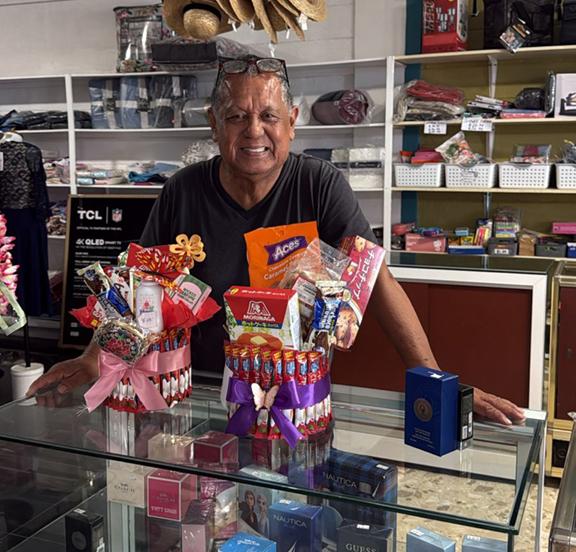
Eisgrou said, “Tinian is strong because its people are strong,” he said. “We remain committed to serving you, no matter the challenges, and we will continue working hard to support our island’s recovery and resilience.” SONGSONG, Rota — Even before the typhoon, businesses on Rota were grappling with persistent supply chain disruptions, rising freight costs, limited cargo access, and mounting operational expenses, according to Island A-Heart retailer and Rota Chamber of Commerce acting president Juan "Pan" T. Guerrero.
Guerrero said logistical challenges were affecting businesses months before the typhoon struck, especially small retailers dependent on regular shipments from Saipan and Guam.
“You know, the supply chain is affected regardless of the typhoon. It is affected already with the fuel increase.” He added that businesses were already having trouble securing food commodities and other basic products before Sinlaku arrived. “Before the typhoon, we were having a hard time trying to get a few items,” Guerrero said, particularly products tied to food assistance purchases and everyday grocery demand.
Smaller retailers on Rota often compete against larger stores for limited inventory from distributors, he said. “We see the supply chain shrinking. And the famous word is ‘we’re out of stock, but it's in the [other] store.’”
Guerrero said small businesses cannot afford to overstock because of expiration risks and the financial losses tied to unsold products. “I only bring in sufficient quantities for what I can sell, rather than buying big quantities and half of it will go to waste.”
Produce shortages have become another challenge following the storm’s destruction of local crops and vegetation.
“But we’re short because when Sinlaku came by, it hit us from the front and hit us from the back,” Guerrero said.
Fresh vegetables remain available only in limited quantities and at significantly higher prices, he added, with some businesses turning to costly air cargo shipments to keep shelves stocked.
Guerrero also discussed ongoing cargo and port concerns on Rota. Rumors persist that some stores have been sourcing products directly from Guam using private vessels, though Guerrero declined to confirm it. “There are rumors,” he said carefully, while also emphasizing that if these rumors were true regulations should apply equally to all businesses operating on the island.
He also raised concerns about port operations prior to Sinlaku, saying Rota’s port had temporarily ceased certain operations weeks before the storm due to U.S. Coast Guard-related compliance concerns. The businessman said freight and tariff-related price increases continue to burden both businesses and consumers across Rota.
“Everything that we buy is expensive; 100% of all inbound cargo has increased.”
Guerrero said Island A-Heart has adapted by focusing on customer-requested products and nutritional food selections. “We ask customers what they want,” he said. “We bring in exactly what they want.”
He said the store itself sustained no major structural damage during the typhoon, although the business operated without power for four days. Backup generators helped preserve frozen goods during the outage. Still, he said many households across Rota suffered food losses after prolonged blackouts, particularly families using upright freezers.
Guerrero said Rota residents and businesses later organized donations for Saipan and Tinian communities recovering from Sinlaku. “We did donations for Tinian and Saipan because we feel very strongly that the people here receive more aid than Saipan and Tinian,” Guerrero said. He personally coordinated with Tinian officials for a second round of donations and Rota residents also contributed funds to assist medical referral patients on Saipan, he said.
“Roughly, more or less, we donated a few hundred dollars,” Guerrero said, adding that friends from Honolulu also contributed “a few thousand dollars” to the American Red Cross and Salvation Army relief efforts. Island A-Heart’s operations have largely returned to normal since the typhoon, with the business even expanding some of its product offerings. mbj
United Airlines Holdings, Inc. reported an all-time record total operating revenue of $17.9 billion for the third quarter of 2026, representing a 17.4% increase compared to the same period in 2025.
Just hours after Super Typhoon Champi passed south of Guam, President Donald Trump approved Gov. Lourdes A. Leon Guerrero's request for an emergency declaration, which authorizes the Department of Homeland Security's Federal Emergency Management Agency to coordinate emergency assistance.
SAIPAN, Northern Mariana Islands — For a growing number of Northern Mariana Islands entrepreneurs, a folding tent, a table, some inventory, and a few hours in front of a weekend crowd can be the first step toward something much bigger.