
















BY MARK RABAGO
Saipan Correspondent
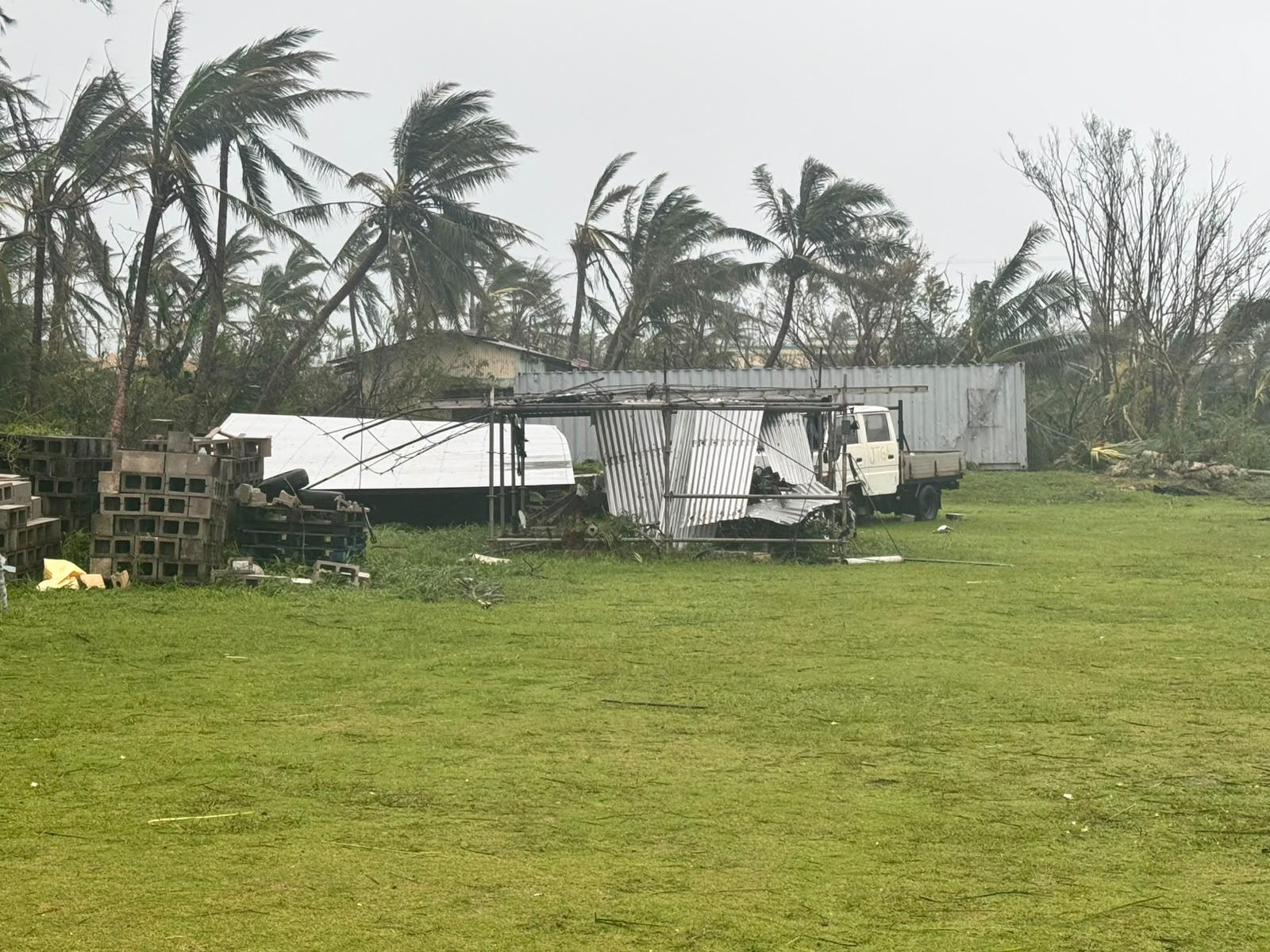
Rota faces months of recovery after Super Typhoon Bavi damaged more than half the island's homes, businesses, and government facilities, with electricity potentially taking up to three months to restore, Mayor Aubry Hocog said July 7.
Speaking a day after the Category 5 storm struck the island directly, Hocog said preliminary windshield assessments indicate that more than half of all structures on Rota suffered some degree of damage, making Bavi one of the most destructive storms to hit the island in recent years.
"I would even say more than like 50% of our island has undergone damages and it could be more," Hocog said. "The reason I say this is because many of our residents, they have concrete homes but either their extended outside kitchen or their awnings or their roofs or their other shelters, they are with tin roofs and those are all destroyed ... many of them have undergone major damages or have their homes totally destroyed."
The mayor said the destruction extends beyond private residences. "Not only do we see that there are damages to their homes but even to our government facilities, our public facilities. You know, Rota really is going through a lot right now." Although officials confirmed there were no fatalities, Hocog said there were two reports of non-fatal injuries during the storm (lacerations) and individuals were treated and released from the Rota Health Center. For businesses hoping to reopen, restoring utilities remains the biggest hurdle. Hocog said damage to the island's electrical distribution system was extensive.
"Many if not all the wooden poles have been destroyed or damaged. Many of the power lines are on the roadside. It's going to take a while, estimation about maybe two to three months, but we have a very great team of [the Commonwealth Utilities Corp.]." Water restoration has become the government's immediate priority. Residents are currently receiving rationed water — up to 25 gallons per household — from the Gila-Longa Reservoir while crews work to repair damaged water infrastructure near the chlorine station.
Department of Public Works teams are clearing access routes so CUC repair crews can begin work as soon as additional personnel and materials arrive from Saipan. "I'm very hopeful that we can rectify that sooner because many of our people I know would rather prefer to have water than power only for the sanitation and the safety of our people. Understanding and recognizing the major damage of our power system, we know that would take longer." The prolonged utility outage is also expected to delay the reopening of many businesses. "I know a lot of the business community too, they have incurred a lot of damages to their respective business facilities.
I know they too are limited in opening the hours of operation." Gov. David M. Apatang issued an all-clear for Rota and the rest of the commonwealth effective 12 p.m. July 7 allowing recovery efforts to accelerate. However, officials continue to caution residents about damaged infrastructure, debris, localized flooding, downed power lines and hazardous road conditions as cleanup and damage assessments continue. Looking ahead, Hocog said the back-to-back blows from super typhoons Sinlaku and Bavi should prompt renewed investment in disaster resilience as forecasters warn El Niño could produce another active typhoon season. "All we can do is be prepared as best we can be. That's why information, communication is very, very important," she said. "Mother Nature, there's no way that we can schedule anything with them.
All we can do is be as prepared on our end." She said recent storms have exposed longstanding infrastructure weaknesses that require stronger partnerships with the NMI government and federal agencies. "I think this is where it's absolutely critical to collaborate with our federal partners, collaborate with our state, just to see how we can prioritize what the needs are. And if there are federal funds available, grant funds available, these would be the things that we would prioritize to ensure that we can survive, that we can sustain our island through times like this."
Clement Berumudes, special assistant for the NMI Homeland Security and Emergency Management, said initial assessments showed Rota had suffered extensive damage but expressed relief that no deaths or injuries had been reported. "I think that goes to the people heeding the warnings, preparing and seeking shelter, and then staying sheltered in place when we issued that advisory," he said.
Bermudes described Rota as "quite devastated," with damage to roads, ports and critical infrastructure, while crews worked to restore access and essential services. He said Tinian and Saipan escaped damage on the scale experienced during Super Typhoon Sinlaku in April, while federal and local agencies continued assessing losses before seeking a major disaster declaration. National Weather Service Guam meteorologist Brandon Aydlett, said preliminary assessments indicated Bavi produced stronger winds than Sinlaku, but moved much faster through the Mariana Islands, reducing the duration of destructive conditions across Guam, Saipan and Tinian. "The speed of motion of Sinlaku was extremely slow, around 5 miles per hour. Super Typhoon Bavi was moving a bit faster, anywhere from 10 to 13 miles per hour, and so that really significantly reduced the duration of impacts across the Marianas."
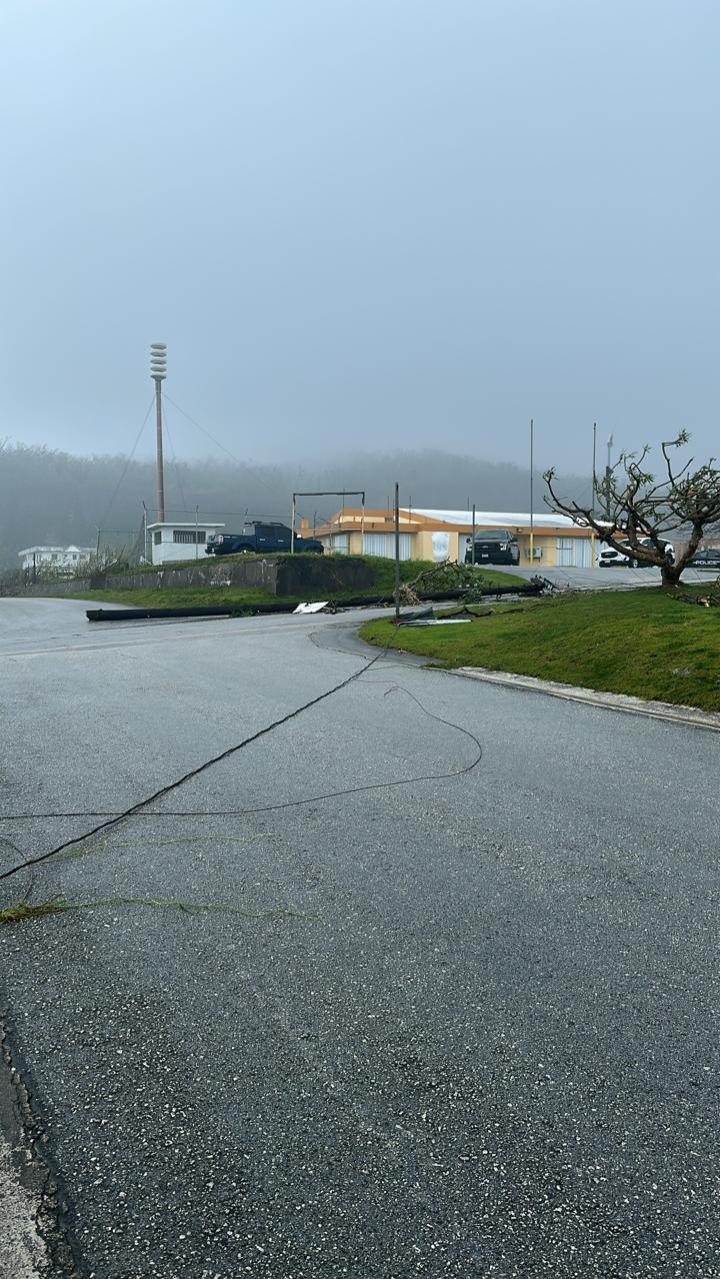
Aydlett said meteorologists were still analyzing damage on Rota to determine the storm's peak wind speeds but estimated Bavi reached 175 to 180 mph at its strongest near the island. He also urged residents not to become complacent, saying forecasters were monitoring Invest 97W in eastern Micronesia. "I wouldn't say don't be too alarmed just yet. It is something to watch, to be aware of, not necessarily to act on yet." He said El Niño conditions were expected to keep the western Pacific active during the remainder of the tropical cyclone season.
As recovery gets under way, the Micronesia Climate Change Alliance has launched a fundraising campaign to support Rota residents, with donations earmarked for food, water, cooking fuel, hygiene supplies and other urgent needs. "Every need on this list came directly from Luta households. Your donation goes straight to meeting them," the organization said. Donations marked "Luta" will go directly toward recovery efforts as families continue rebuilding. The U.S. Coast Guard’s Forces Micronesia/Sector Guam said on July 7 that “Saipan assessments are underway with assistance from the NMI Customs and Biosecurity.
Tinian and Rota surface access is more challenging, the Coast Guard said. Aerial assessments of Guam and Rota were conducted aboard an HSC-25 helicopter. The Coast Guard stressed that vessels should report distress via VHF 16 or 911 only; social media is not monitored. Widespread VHF outages persist, and vessels should carry multiple forms of communication.
The Coast Guard also said people should stay out of the water and off jetties, piers, and docks as a High Surf Warning, Coastal Flood Advisory, and Hazardous Seas Warning are in effect. President Donald J. Trump approved the NMI’s request for an emergency declaration on July 3 in response to Typhoon Bavi.
The declaration authorizes the Federal Emergency Management Agency to provide emergency protective measures and direct federal assistance to help protect lives, property and public health and safety across the commonwealth. According to the NMI Office of the Governor, both FEMA and American Red Cross personnel are in the NMI. Andrew F. Grant is the federal coordinating officer for the federal response. mbj
Maureen N. Maratita contributed to this story.
Saipan Correspondent
Rota faces months of recovery after Super Typhoon Bavi damaged more than half the island's homes, businesses, and government facilities, with electricity potentially taking up to three months to restore, Mayor Aubry Hocog said July 7.
Speaking a day after the Category 5 storm struck the island directly, Hocog said preliminary windshield assessments indicate that more than half of all structures on Rota suffered some degree of damage, making Bavi one of the most destructive storms to hit the island in recent years.
"I would even say more than like 50% of our island has undergone damages and it could be more," Hocog said. "The reason I say this is because many of our residents, they have concrete homes but either their extended outside kitchen or their awnings or their roofs or their other shelters, they are with tin roofs and those are all destroyed ... many of them have undergone major damages or have their homes totally destroyed."
The mayor said the destruction extends beyond private residences. "Not only do we see that there are damages to their homes but even to our government facilities, our public facilities. You know, Rota really is going through a lot right now." Although officials confirmed there were no fatalities, Hocog said there were two reports of non-fatal injuries during the storm (lacerations) and individuals were treated and released from the Rota Health Center. For businesses hoping to reopen, restoring utilities remains the biggest hurdle. Hocog said damage to the island's electrical distribution system was extensive.
"Many if not all the wooden poles have been destroyed or damaged. Many of the power lines are on the roadside. It's going to take a while, estimation about maybe two to three months, but we have a very great team of [the Commonwealth Utilities Corp.]." Water restoration has become the government's immediate priority. Residents are currently receiving rationed water — up to 25 gallons per household — from the Gila-Longa Reservoir while crews work to repair damaged water infrastructure near the chlorine station.
Department of Public Works teams are clearing access routes so CUC repair crews can begin work as soon as additional personnel and materials arrive from Saipan. "I'm very hopeful that we can rectify that sooner because many of our people I know would rather prefer to have water than power only for the sanitation and the safety of our people. Understanding and recognizing the major damage of our power system, we know that would take longer." The prolonged utility outage is also expected to delay the reopening of many businesses. "I know a lot of the business community too, they have incurred a lot of damages to their respective business facilities.
I know they too are limited in opening the hours of operation." Gov. David M. Apatang issued an all-clear for Rota and the rest of the commonwealth effective 12 p.m. July 7 allowing recovery efforts to accelerate. However, officials continue to caution residents about damaged infrastructure, debris, localized flooding, downed power lines and hazardous road conditions as cleanup and damage assessments continue. Looking ahead, Hocog said the back-to-back blows from super typhoons Sinlaku and Bavi should prompt renewed investment in disaster resilience as forecasters warn El Niño could produce another active typhoon season. "All we can do is be prepared as best we can be. That's why information, communication is very, very important," she said. "Mother Nature, there's no way that we can schedule anything with them.
All we can do is be as prepared on our end." She said recent storms have exposed longstanding infrastructure weaknesses that require stronger partnerships with the NMI government and federal agencies. "I think this is where it's absolutely critical to collaborate with our federal partners, collaborate with our state, just to see how we can prioritize what the needs are. And if there are federal funds available, grant funds available, these would be the things that we would prioritize to ensure that we can survive, that we can sustain our island through times like this."
Clement Berumudes, special assistant for the NMI Homeland Security and Emergency Management, said initial assessments showed Rota had suffered extensive damage but expressed relief that no deaths or injuries had been reported. "I think that goes to the people heeding the warnings, preparing and seeking shelter, and then staying sheltered in place when we issued that advisory," he said.
Bermudes described Rota as "quite devastated," with damage to roads, ports and critical infrastructure, while crews worked to restore access and essential services. He said Tinian and Saipan escaped damage on the scale experienced during Super Typhoon Sinlaku in April, while federal and local agencies continued assessing losses before seeking a major disaster declaration. National Weather Service Guam meteorologist Brandon Aydlett, said preliminary assessments indicated Bavi produced stronger winds than Sinlaku, but moved much faster through the Mariana Islands, reducing the duration of destructive conditions across Guam, Saipan and Tinian. "The speed of motion of Sinlaku was extremely slow, around 5 miles per hour. Super Typhoon Bavi was moving a bit faster, anywhere from 10 to 13 miles per hour, and so that really significantly reduced the duration of impacts across the Marianas."
Aydlett said meteorologists were still analyzing damage on Rota to determine the storm's peak wind speeds but estimated Bavi reached 175 to 180 mph at its strongest near the island. He also urged residents not to become complacent, saying forecasters were monitoring Invest 97W in eastern Micronesia. "I wouldn't say don't be too alarmed just yet. It is something to watch, to be aware of, not necessarily to act on yet." He said El Niño conditions were expected to keep the western Pacific active during the remainder of the tropical cyclone season.
As recovery gets under way, the Micronesia Climate Change Alliance has launched a fundraising campaign to support Rota residents, with donations earmarked for food, water, cooking fuel, hygiene supplies and other urgent needs. "Every need on this list came directly from Luta households. Your donation goes straight to meeting them," the organization said. Donations marked "Luta" will go directly toward recovery efforts as families continue rebuilding. The U.S. Coast Guard’s Forces Micronesia/Sector Guam said on July 7 that “Saipan assessments are underway with assistance from the NMI Customs and Biosecurity.
Tinian and Rota surface access is more challenging, the Coast Guard said. Aerial assessments of Guam and Rota were conducted aboard an HSC-25 helicopter. The Coast Guard stressed that vessels should report distress via VHF 16 or 911 only; social media is not monitored. Widespread VHF outages persist, and vessels should carry multiple forms of communication.
The Coast Guard also said people should stay out of the water and off jetties, piers, and docks as a High Surf Warning, Coastal Flood Advisory, and Hazardous Seas Warning are in effect. President Donald J. Trump approved the NMI’s request for an emergency declaration on July 3 in response to Typhoon Bavi.
The declaration authorizes the Federal Emergency Management Agency to provide emergency protective measures and direct federal assistance to help protect lives, property and public health and safety across the commonwealth. According to the NMI Office of the Governor, both FEMA and American Red Cross personnel are in the NMI. Andrew F. Grant is the federal coordinating officer for the federal response. mbj
Maureen N. Maratita contributed to this story.