
















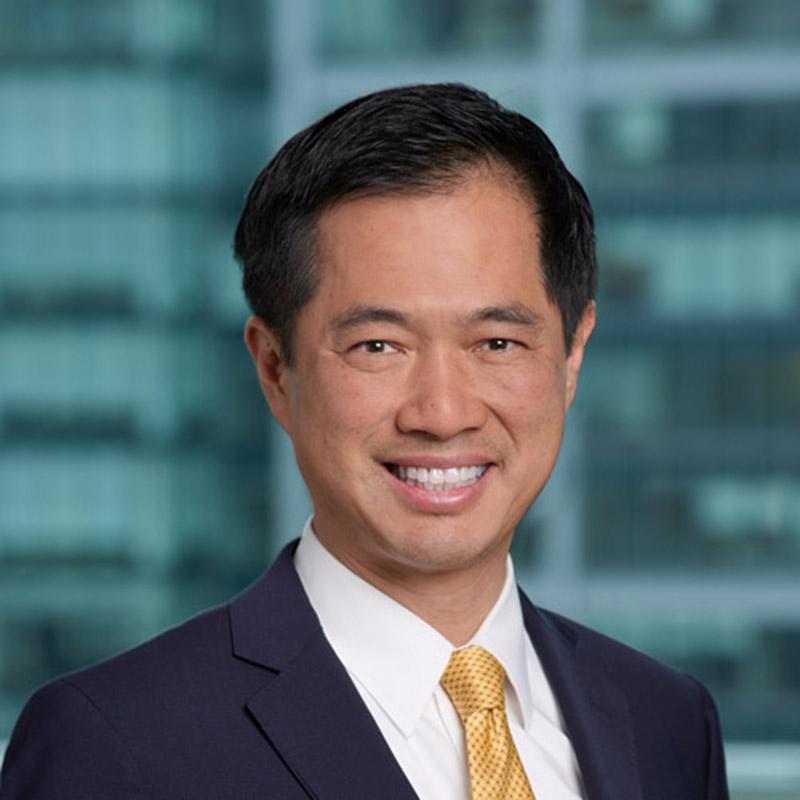
Q: After spending more than two decades in top-tier global financial centers with major firms like Fidelity and BlackRock, what inspired your decision to relocate to Guam and join BG Investment Services LLC as chief strategist?
A: More impact, and really great people! I have known David John, Candy Chamberlain, Maree Sgro, Melanie Mandiola, and team for three years as a client of Fidelity where I worked for 11 years. They are some of my favorite people. A chance to work with them and make an impact for the people of Guam, the Northern Mariana Islands, Palau, and the region with what I have learned at firms like Fidelity and BlackRock would be very meaningful for me. My household will remain in Boston, and I will commute to Guam quarterly. Being the investment person, being on East Coast time can be an advantage for BG Investment Services LLC.
Q: Coming from institutional roles where you designed portfolio solutions for large-scale wealth management firms across the mainland U.S., how do you plan to tailor institutional-grade investment strategies for clients, trust funds, and businesses in Guam and Micronesia?
A: The good news is that the tools don't change — what changes is the fit. At Fidelity, I built portfolios that advisors used for hundreds of billions of dollars across tens of thousands of households, and the discipline was the same for every one of them: know the objective, know the time horizon, know when the money will be needed, then construct the most elegant portfolios to help clients achieve their goals.
What we tailor is the fit. A government reserve fund, a bank's liquidity portfolio, a retirement plan, and a family that has just sold land held for generations each need something different. In my first few months, that has meant building a laddered Treasury and agency reserve product for institutions whose cash has been sitting in money market funds and certificates of deposit; reviewing a target date retirement program to lower its cost and raise its long-term growth potential; and building values-based versions of our stock portfolios — an [Environmental, Social, and Governance] version and a Catholic Values version — for clients who want their money to reflect what they believe.
Institutional grade does not mean complicated. Most of the time, it means more customized to the goals.
Q: What unique growth opportunities or untapped potential do you observe in the regional wealth management and financial services landscape across the Western Pacific?
A: Three things stand out to me:
First, there is a lot of capital in the region that is parked rather than invested — reserves sitting in money market funds and certificates of deposit at government entities, businesses, and banks, earning less than a simple Treasury ladder would pay with the same safety. Moving money from "parked" to "purposefully invested" is worth real dollars to the region every single year.
Second, the investment decisions for many of the region's largest pools of money — trust funds, pension programs, and endowments — have historically been made off-island by mainland firms who don’t know the islands, with reports that are hard for a board to evaluate. There is an opportunity for a local firm with institutional experience to bring transparency: what are you paying all-in, how are you doing against a simple benchmark, and can you actually understand your own report?
Third, the generational wealth transfer happening on the mainland is happening here too, as families monetize land and businesses held for decades. Those families need advice on tax-efficient income, values-aligned investing, and planning as much as any family in Boston — and they would rather get it from people they know.
Q: As chief strategist, what are your immediate strategic priorities for expanding the capabilities and investment offerings at BG Investment Services LLC?
A: Five things.
One, reserve management for institutions. We have built a bell-shaped Treasury and agency ladder that gives banks, government entities, and businesses a meaningful pickup over money market and CD rates without giving up safety or liquidity. That is the most immediate, measurable win we can deliver for the region.
Two, retirement plans. Retirement money has the longest time horizon of any money we manage, so allocation and cost matter enormously over decades. We are reviewing target date programs and plan lineups with that lens.
Three, a complete portfolio lineup. We manage our own stock portfolios — Core, Core Growth, and Growth — stock by stock, and we have added ESG and Catholic Values versions. For high-net-worth families, we are building individual municipal bond portfolios for tax-free income.
Four, research and technology. I want BG Investment Services LLC to have an institutional research process: a monthly market review, daily monitoring of every position we own, and the automation that lets a small team punch well above its weight.
Five, education. Part of my job at Fidelity was standing on stage explaining the economy and markets to thousands of advisors. I intend to do the same for boards, business owners, and families across the region.
Q: Beyond the professional move, transitioning from major financial hubs like Boston and New York to island life in Guam is a significant personal change. How are you and your family finding the transition, and what aspects of local culture or living on-island have you enjoyed most so far?
A: My household will remain in Boston, and I will commute to Guam quarterly. Being the investment person for the firm, the time zone actually works in our favor: I am awake for the U.S. market open, and by the time the team in Guam starts its day, the research, analysis, and trading are already done and waiting for them. As a team, we can truly say we work 24 hours a day for our client.
What I have enjoyed most is getting to know the region through its people first. I have known the BG Investment Services LLC and ASC Trust team for years, and what struck me from the beginning is how much they care about their clients — these are their neighbors, their churches, and their kids' schools. And I have been struck by how far a bit of institutional discipline goes here — a board or a business owner will listen, decide, and act in a way that is refreshing after years in very large organizations.
When I visited Koror, Palau in July with the ASC Trust and BG Investment Services LLC team for the opening of our office there, I was struck by how much the team listened to the needs of the people there. And we did do some amazing snorkeling there, too. The team sure knows how to have fun. I don’t think I ever snorkeled with my boss and colleagues in any of my jobs before.
Q: With the U.S. Federal Reserve taking firm monetary action to raise interest rates to curb persistent inflation, how do you evaluate the current macroeconomic landscape and the Fed's trajectory moving forward?
A: Chairman Warsh has laid out a dashboard of what he watches — inflation, private domestic demand, business investment, profit margins, labor supply, credit conditions, and the real policy rate. That dashboard was flashing red in September and that led to a hike.
The bigger point for investors is that interest rates are about more than inflation. Two forces that have nothing to do with the next CPI print — government debt and demographics — are going to keep long-term rates structurally higher than what we got used to in the 2010s. The U.S. is running large deficits, net interest cost is now one of the biggest items in the federal budget, a wall of Treasury debt has to be refinanced over the next few years, and an aging population means fewer workers and more retirees drawing down savings. That shows up as a higher term premium on long bonds regardless of what the Fed does at the short end.
So my evaluation is: a solid U.S. economy with strong corporate earnings that help stocks, and long rates that will stay higher for longer, which should hurt bonds. Don't build a business plan or a portfolio that depends on rates going back to zero.
Q: Higher federal interest rates often create a ripple effect on island economies like Guam, from increased borrowing costs for commercial development to higher mortgages and consumer prices. How should local businesses and institutional investors navigate these headwind pressures?
A: Higher rates are a headwind for borrowers and a tailwind for savers, and most local businesses and institutions are both. My advice is to make sure you are collecting on the tailwind.
If you hold cash — and most businesses, banks, and government entities hold more than they think — get paid for it. Money sitting in a checking account, a money market fund, or a CD that is about to roll off at a lower rate is leaving real income on the table.
Match your assets to your liabilities. If you know you have a capital project in 18 months, buy a bond that matures in 18 months. You lock in the yield, you eliminate the guesswork, and you are not hoping the Fed bails you out.
On the borrowing side, don't wait for a rate cut to make a decision. Stress-test every project at today's rates, not at the rates you hoped for. If the project only works if rates fall, it is not a project — it is a bet. And if a project's cash flows can't absorb variability, pay up for fixed-rate financing.
For institutional investors, the answer is a written investment policy: what is this money for, when do we need it, how much risk can we take, and what benchmark do we measure ourselves against? Institutions with a policy sail through rate cycles; institutions without one end up reacting to headlines.
Q: In an environment where political leadership changes and shifting federal fiscal policies directly influence market sentiment and central bank actions, how are you positioning investment portfolios to mitigate volatility while still capturing yield?
A: I try very hard not to position portfolios around politics. The track record of investors who did — in either direction — is not good. The goal is to build portfolios that do not require a correct forecast. On the fixed income side, that means ladders. A ladder owns bonds across a range of maturities, captures today's yields, and rolls the proceeds as bonds mature. If rates go up, the maturing bonds get reinvested at higher yields; if rates go down, the longer bonds appreciate. You are collecting the yield either way, and the yield itself is now the cushion against volatility — a portfolio yielding 4% or 5% can absorb a lot of price noise that a portfolio yielding 1% could not.
On the equity side, it means quality. We build our stock portfolios one company at a time, and we look for durable profit margins, strong balance sheets, and cash flow that protects a company during a downturn. Those companies do not need a friendly administration or a rate cut to do well. We diversify globally, and we rebalance mechanically rather than emotionally.
The volatility mitigation comes from the structure — the ladder, the quality screen, and the rebalancing discipline—not from a prediction about Washington.
Q: Given your extensive background in portfolio engineering, what asset allocation advice or strategic adjustments are you emphasizing today for local retirement funds, trust foundations, and high-net-worth investors on-island?
A: For retirement funds: remember how long the horizon is. Money for a 35-year-old will be invested for 30 years or more, and over that horizon the two things that matter most are how much is in equities and how much is lost to fees. Too many programs are under-invested in equities and overpaying for active management that does not earn its keep. Use low-cost index funds as the core, pay for active management only where it has a demonstrated edge, and treat cost as the one variable you fully control.
For trust foundations and endowments: start with the spending policy and the investment policy statement, then choose a simple benchmark — a 60/40 or 80/20 blend of a broad stock index and a broad bond index — and hold your manager to it net of all fees. Ask what you are paying all-in, including the fees buried inside funds and private vehicles. A simple, low-cost, diversified portfolio is a very high bar to clear, and many complicated portfolios do not clear it. For high-net-worth families: be tax-efficient, and don't reach for yield in complicated products. Individual municipal bonds for tax-free income, individually held stock portfolios that let you manage taxes and reflect your values, and a reserve of Treasuries for the money you will need in the next few years cover most of what a family actually needs. Own what you understand.
Q: Looking ahead into late 2026 and early 2027, what key market indicators or regional economic drivers will you be watching most closely for Guam's investment community?
A: Nationally, I watch the same dashboard the Fed does: core inflation, private domestic demand, business investment, labor supply, and credit conditions. I pay special attention to corporate profit margins, because margins tell you whether companies are absorbing higher costs or passing them on, and to the term premium on long Treasuries, which tells you how much the market is charging Washington for its deficits. The midterm elections and the fiscal path afterward — tariff revenue, spending, and the Treasury's refinancing calendar — will matter more for long rates than the next Fed meeting.
Regionally, I watch tourism arrivals from Japan and Korea and the yen and won exchange rates, because that is the discretionary side of Guam's economy. I watch the military buildup and the federal construction and spending pipeline, because that is the floor under it. I watch the flow of federal funds to the freely associated states under the Compacts of Free Association, which sets the tone for the trust funds and government entities across Micronesia. And I watch local bank deposit rates and lending, which tell you whether liquidity is tightening on island before it shows up anywhere else.
The indicator I care about most, though, is one we can influence: how much of the region's reserve capital moves from sitting in cash to being purposefully invested. Every dollar that makes that move is a dollar working for Guam and its neighbors. mbj


