

















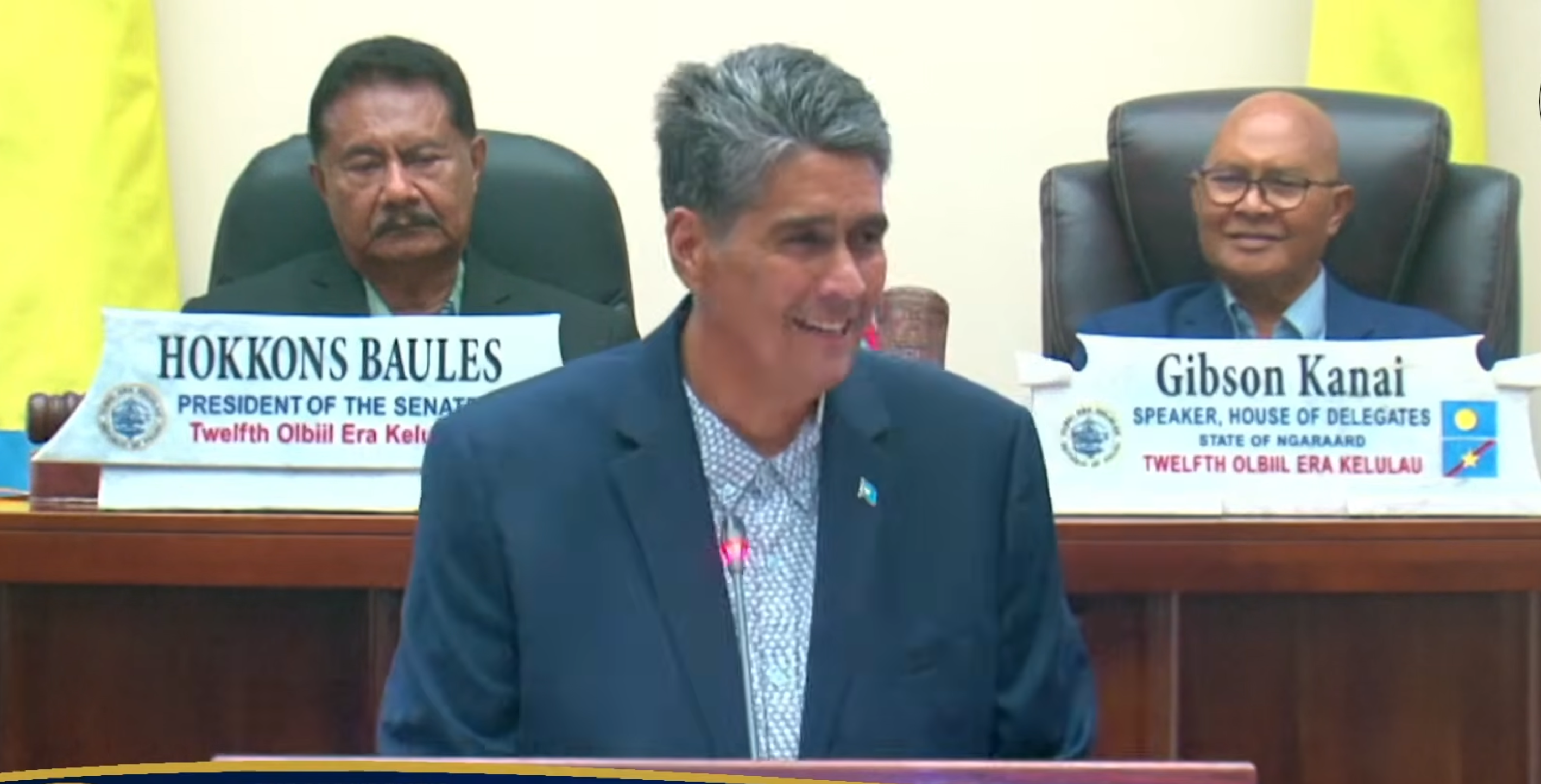
Ngerulmud, Palau — Within the next few weeks, Palau expects a report on the new national hospital relocation project, President Surangel Whipps Jr. told lawmakers in a rescheduled State of the Republic Address on July 22.
The site selection is the next milestone in a process that began in February, when Whipps signed a $2.37 million contract with Honolulu-based Architects Hawaii, Ltd. to carry out a U.S. Trade and Development Agency-funded feasibility study on relocating and redesigning Belau National Hospital. The agreement was signed in Honolulu at the Pacific Agenda: Investment, Security, and Shared Prosperity Summit, with U.S. Deputy Secretary of State Christopher Landau presiding over the announcement. Architects and engineers have since assessed potential sites. State governments of Airai, Koror and Ngatpang passed resolutions offering to host the new hospital.
Whipps said the goal is a modern facility that can provide emergency care, surgeries and diagnostic services many Palauans currently travel overseas to receive — keeping health care dollars in Palau and families together during medical crises. The hospital push was one thread in an address that doubled as both a five-year scorecard and a pitch to lawmakers to move a stalled legislative agenda before Palau hosts the 55th Pacific Islands Forum Leaders Meeting next month — the largest regional gathering of regional leaders that the country has ever staged.
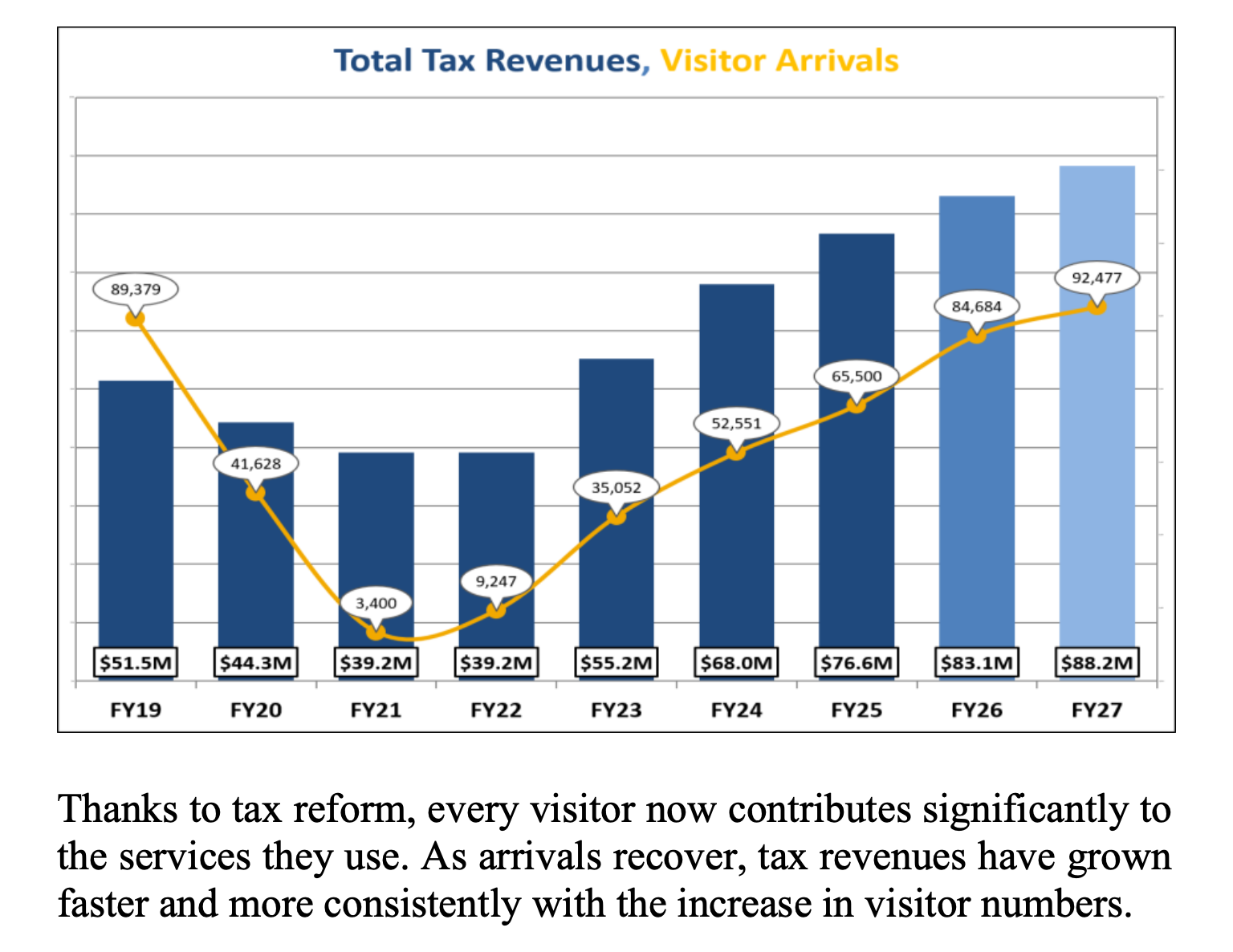
Visitor arrivals collapsed during the COVID-19 pandemic, Whipps said, but have climbed back into the tens of thousands, drawing from Taiwan, Japan, the U.S., Europe and Australia. In 2025, Palau welcomed 65, 558. With nearly 50,000 visitors as of June in 2026, and with the 55th Pacific Islands Forum Leaders Meeting expected in the third quarter of the calendar year, officials estimate exceeding 2025 numbers.
President Whipps credited a run of new air service — Taipei flights from Taiwan, with hope for Kaohsiung to follow; Brisbane service from Australia; Tokyo flights launched last October alongside United Airlines' expanding commitment to the market; and additional Manila flights from Philippine Airlines — with rebuilding the visitor base on a broader footing than Palau's historic reliance on any single source market.
And while these visitor arrivals fall short of tourism peak around 2015 when numbers exceeded 160,000, the fiscal story is moving faster than the headcount: 2024 general government revenues have climbed past pre‑COVID levels, buoyed by comprehensive tax reforms, higher-value tourism and new revenue streams that include business profit tax, visitor‑focused levies, and digital programs.
In FY2019, government revenues were at $51.5 million with 89,379 visitors. In comparison, FY2025, revenues were at $76.6 million with only 65,500 visitors.
That disconnect that used to exist between visitor arrivals and dollars in the treasury is central to President Whipps’s pitch — to build a more resilient, higher‑yield tourism economy that can fund services and infrastructure without simply chasing volume.
The most consequential policy shift Whipps outlined concerns the Palau National Marine Sanctuary, which set aside 80% of the country's exclusive economic zone as a no-take zone when it took full effect in 2020. Citing a new Nippon Foundation-sponsored study using Western and Central Pacific Fisheries Commission catch data, Whipps said the EEZ tuna catch has fallen roughly 94% since 2017, local tuna supply is down 87%, longline license revenue has dropped 92%, and the number of licensed longline vessels has fallen from 75 to five. He's asking the Olbiil Era Kelulau to shrink the no-take zone to a 50-nautical-mile band around Palau's reefs — about 30% of the EEZ — paired with full management of the rest of the zone. The reform package is already before the Olbiil Era Kelulau, the nation’s legislature.
Whipps also used the address to thank Palau's principal development partners for infrastructure now under construction or newly funded:
-
United States: Reconstruction of Malakal Port, Palau's main commercial harbor, is underway after 80 years without a major overhaul and regular maintenance; Compact funding is also financing a new nine-classroom facility in Airai, renovations at Palau High School and other schools, and support outside of the the national hospital project.
-
Japan: A $12 million rebuild of the Minatobashi Bridge — the sole link to Malakal Island's port, power plant and fuel storage — broke ground last year and is due for completion by April 2027. Japan is also backing a planned Ngatpang fishing port and a roughly $17 million project to replace aging water pipes and install smart meters in Koror and Airai, where more than half of treated water is currently lost before reaching customers.
-
Australia: Financed and built Palau's first utility-scale solar-and-battery plant, now supplying close to a fifth of the country's power, with additional grid upgrades in progress.
-
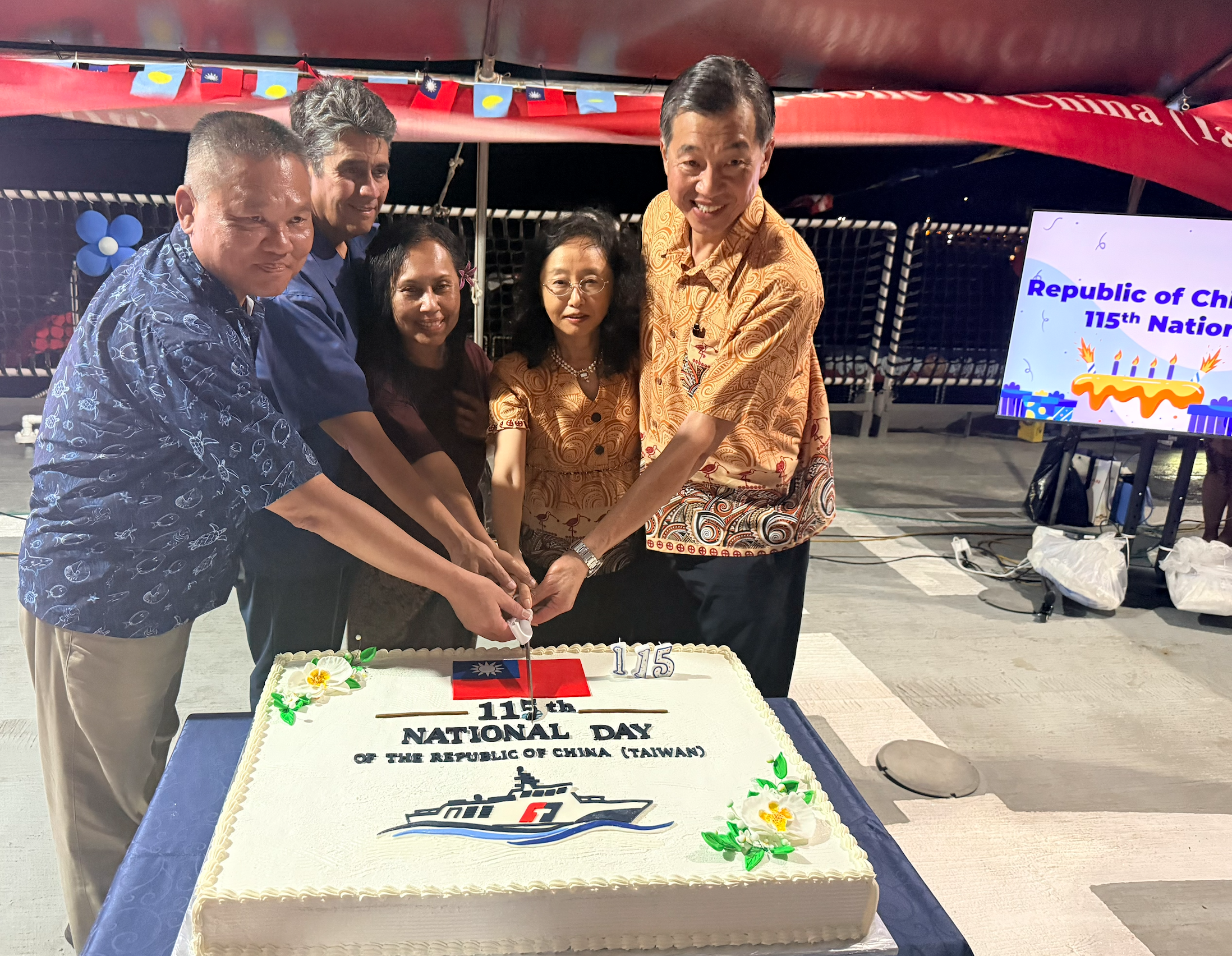
Taiwan: Has funded 68% of Palau's roads and continues to support agriculture, school lunch programs, and marine restocking work ahead of the Pacific Islands Forum meeting.
Whipps pointed to digital residency and ship registry programs — described as generating “millions of dollars” in new revenue after starting from almost nothing — as evidence Palau can build non-tourism revenue streams. He pressed lawmakers to finish pending bills on an aircraft registry and an “elite visa” program, along with new trademarks legislation and a Tax Administration Act, calling all four new avenues for economic diversification.
The proposed FY2027 budget submitted to the OEK on July 14 totals $165.8 million in operating spending, an increase of nearly 11% over the current year. Health and education account for $42.1 million combined. The budget also funds a 5% public-sector wage increase, moving it toward $6 an hour, and $12.5 million earmarked for prepaying high-interest debt. Debt service has climbed from about 2.5% of the national budget in 2021 to nearly 13% today, Whipps said, a legacy in part of pandemic-era borrowing and earlier infrastructure debt tied to solar, airport and telecommunications projects.
Whipps is asking lawmakers to act on a lengthy list of bills, including Social Security and pension reform to address a roughly $300 million unfunded liability, hospital-authority transition legislation, the fisheries reform package, an Electronic Transactions Act, and alcohol licensing and border-security measures. He also renewed a request the OEK approve technical amendments governing the Cyclical Reserve Fund and Climate Resilience Fund so those reserves can be tapped when needed. mbj