











BY MAUREEN N. MARATITA
Journal Staff
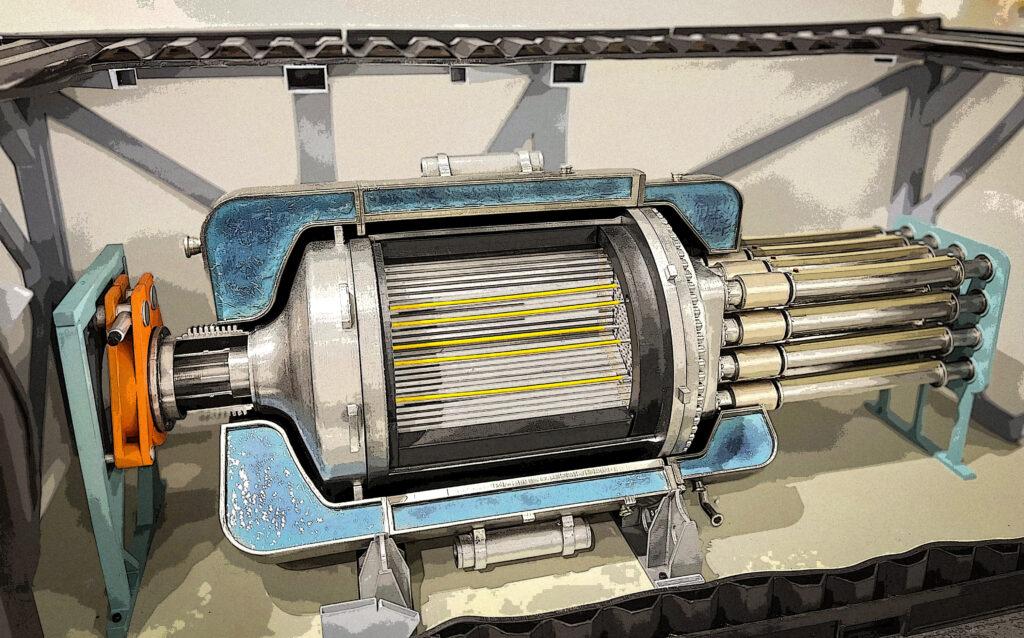
The Pacific Center for Island Security spoke out on June 7 on the inclusion in the fiscal 2026 National Defense Act of a provision to deploy a small modular reactor by 2030 to the Indo-Pacific area of command.
While Guam is not mentioned specifically, Robert A. Underwood, chairman of the center, said if the use of the reactor is solely for a military purpose, that would make it a target. Underwood said there is “widespread agreement” that the use of nuclear reactors in areas of potential conflict is not advisable.
He also said that the quantification of “microreactor” had expanded from 1-5MW to under 50 MW, an increase of 1,000% of capacity.
James C. Moylan, Guam’s delegate to Congress, voted no on the nuclear reactor amendment, which Underwood said likely reflects board community sentiment. Underwood also pointed out that Moylan did not speak out on the issue, while Rep. Jill Tokuda of Hawaii raised concerns for Guam and Hawaii.
Moylan’s office issue a release saying that he has “consistently worked to ensure Guam is protected whenever proposals involving nuclear infrastructure are discussed,” and referred to language “he successfully secured” in the fiscal 2026 NDA requiring advance notice to Congress and Guam’s governor before any proposal of a permanent nuclear reactor in Guam.
The delegate’s office also shared his support for Guam’s farmers and in other areas in the fiscal 2027 Agriculture Appropriations Bill, and said Moylan had “successfully advocated for a number of Guam priorities in the NDAA, which it “looks forward to sharing” later this week.
According to Journal files, in January 2024, the paper was invited to a media briefing and discussion with the project coordinator for Project Pele at the Strategic Capabilities Office, within the Office of the Secretary of Defense. Project Pele was first mooted by the Indo-Pacific Command in Hawaii, where its name comes from, according to media reports. Pele stands for Portable Energy for Lasting Effects.
The Journal was told that what Project Pele is developing is a transportable microreactor that can in theory be used to provide power in remote or islanded locations where power doesn’t exist and for disaster recovery.
Jeff Waksman, the project coordinator said the aim is “to learn about the different situations that are in different locations, what their power needs are, what their power resilience and performance are, as well as local political and cultural issues.”
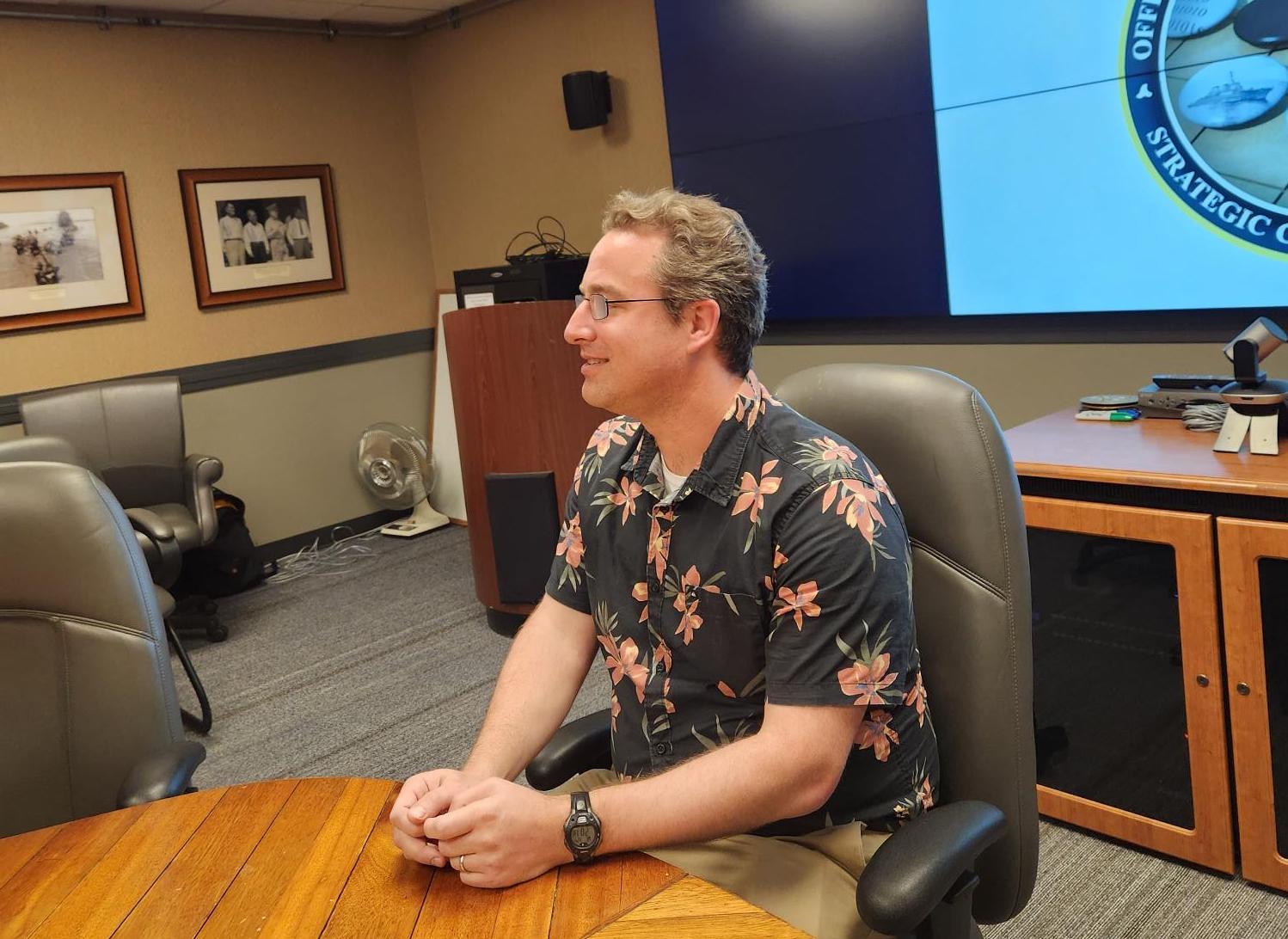
That would include the current price of power and critical infrastructure, he said. “How is it impacted if it loses power for event three seconds?” The risk of flooding and earthquakes are also considered he said.
Waksman said the prototype would be built in Virginia and tested in Idaho. The first prototype mobile microreactor through Project Pele is being fabricated by BWX Technologies at its Innovation Campus in Lynchburg, Va. Designed for the Department of War, the 1.5-megawatt mobile unit is compact enough to fit into four 20-foot shipping containers and is targeted to produce electricity by 2028.
BWXT also developed the TRISO fuel, or Tri-structural ISOtropic particle fuel - which powers the microreactors.
According to literature, for DoW usage, the microreactor should also be capable of shutdown, cool down, and disconnection in less than seven days. The then-DoD’s Strategic Capabilities Office also required that the unit should be capable of starting up within less than 72 hours from the unit’s arrival to reaching full power operations.
One of the requirements is that no nuclear waste will be left behind, Waksman said, unlike at commercial reactors. “If we were going to bring a reactor to any kind of austere location, we would have to bring it all back. … There would be no radioactive material left behind.”
Project Pele is also supported by other companies for what Waksman said in 2024 was estimated at a $600 million to $700 million project. That would be for the whole program going back to 2019, he said.
The need to use non-fossil fueled power has had various U.S. states looking at nuclear power. Guam’s Consolidated Commission on Utilities has a policy on nuclear energy, although it recognized that potential usage is years in the future. The group had met with the Guam Power Authority, Waksman said.
The prototype we’re building is being designed for military purposes,” Waksman told the paper. However, he said, “We expect that there will be commercial spin-offs. There would be a commercial variant, that would probably be a less mobile version, that would be a little bit cheaper that would make more sense commercially.” Precedent exists for this, he said. “The DoD can build the first one, and then commercial spinoffs can allow clean energy.”
Joint Region Marianas said at the time it does not believe that the local government can ban the use of nuclear reactors on federal land, according to a legal analysis. mbj
Journal Staff
The Pacific Center for Island Security spoke out on June 7 on the inclusion in the fiscal 2026 National Defense Act of a provision to deploy a small modular reactor by 2030 to the Indo-Pacific area of command.
While Guam is not mentioned specifically, Robert A. Underwood, chairman of the center, said if the use of the reactor is solely for a military purpose, that would make it a target. Underwood said there is “widespread agreement” that the use of nuclear reactors in areas of potential conflict is not advisable.
He also said that the quantification of “microreactor” had expanded from 1-5MW to under 50 MW, an increase of 1,000% of capacity.
James C. Moylan, Guam’s delegate to Congress, voted no on the nuclear reactor amendment, which Underwood said likely reflects board community sentiment. Underwood also pointed out that Moylan did not speak out on the issue, while Rep. Jill Tokuda of Hawaii raised concerns for Guam and Hawaii.
Moylan’s office issue a release saying that he has “consistently worked to ensure Guam is protected whenever proposals involving nuclear infrastructure are discussed,” and referred to language “he successfully secured” in the fiscal 2026 NDA requiring advance notice to Congress and Guam’s governor before any proposal of a permanent nuclear reactor in Guam.
The delegate’s office also shared his support for Guam’s farmers and in other areas in the fiscal 2027 Agriculture Appropriations Bill, and said Moylan had “successfully advocated for a number of Guam priorities in the NDAA, which it “looks forward to sharing” later this week.
According to Journal files, in January 2024, the paper was invited to a media briefing and discussion with the project coordinator for Project Pele at the Strategic Capabilities Office, within the Office of the Secretary of Defense. Project Pele was first mooted by the Indo-Pacific Command in Hawaii, where its name comes from, according to media reports. Pele stands for Portable Energy for Lasting Effects.
The Journal was told that what Project Pele is developing is a transportable microreactor that can in theory be used to provide power in remote or islanded locations where power doesn’t exist and for disaster recovery.
Jeff Waksman, the project coordinator said the aim is “to learn about the different situations that are in different locations, what their power needs are, what their power resilience and performance are, as well as local political and cultural issues.”
That would include the current price of power and critical infrastructure, he said. “How is it impacted if it loses power for event three seconds?” The risk of flooding and earthquakes are also considered he said.
Waksman said the prototype would be built in Virginia and tested in Idaho. The first prototype mobile microreactor through Project Pele is being fabricated by BWX Technologies at its Innovation Campus in Lynchburg, Va. Designed for the Department of War, the 1.5-megawatt mobile unit is compact enough to fit into four 20-foot shipping containers and is targeted to produce electricity by 2028.
BWXT also developed the TRISO fuel, or Tri-structural ISOtropic particle fuel - which powers the microreactors.
According to literature, for DoW usage, the microreactor should also be capable of shutdown, cool down, and disconnection in less than seven days. The then-DoD’s Strategic Capabilities Office also required that the unit should be capable of starting up within less than 72 hours from the unit’s arrival to reaching full power operations.
One of the requirements is that no nuclear waste will be left behind, Waksman said, unlike at commercial reactors. “If we were going to bring a reactor to any kind of austere location, we would have to bring it all back. … There would be no radioactive material left behind.”
Project Pele is also supported by other companies for what Waksman said in 2024 was estimated at a $600 million to $700 million project. That would be for the whole program going back to 2019, he said.
The need to use non-fossil fueled power has had various U.S. states looking at nuclear power. Guam’s Consolidated Commission on Utilities has a policy on nuclear energy, although it recognized that potential usage is years in the future. The group had met with the Guam Power Authority, Waksman said.
The prototype we’re building is being designed for military purposes,” Waksman told the paper. However, he said, “We expect that there will be commercial spin-offs. There would be a commercial variant, that would probably be a less mobile version, that would be a little bit cheaper that would make more sense commercially.” Precedent exists for this, he said. “The DoD can build the first one, and then commercial spinoffs can allow clean energy.”
Joint Region Marianas said at the time it does not believe that the local government can ban the use of nuclear reactors on federal land, according to a legal analysis. mbj