

















BY DANIEL M. PEREZ
Journal Staff
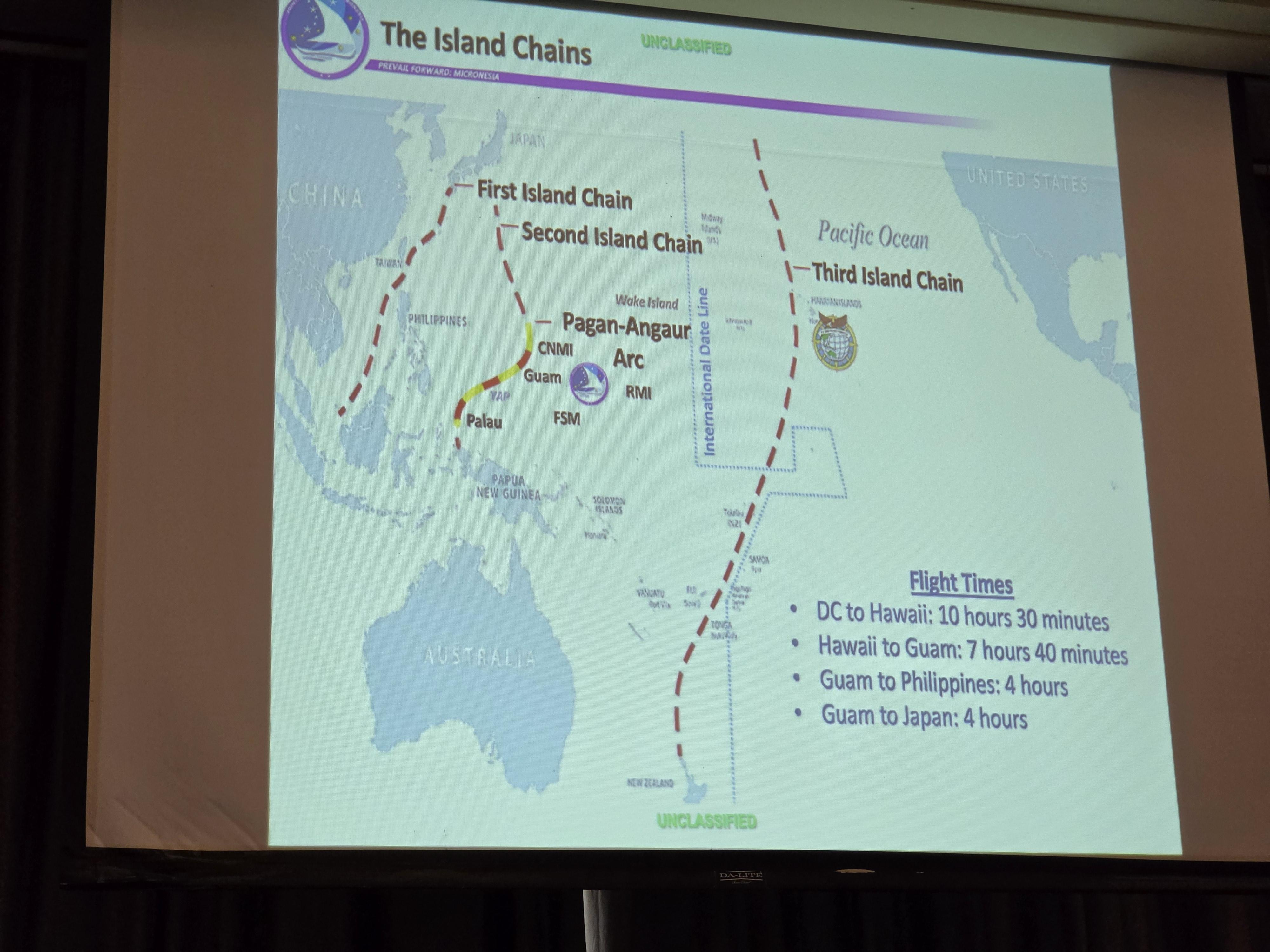
Guam remains the irreplaceable focal point of U.S. defense strategy in the Pacific, but military authorities are actively coordinating with local and federal partners to manage the strains that defense expansion places on civilian infrastructure, according to defense officials.
Speaking at the Guam Chamber of Commerce general membership meeting on Sept. 30 at the Hilton Guam Resort & Spa, Rear Adm. Joshua Lasky, commander of Joint Task Force — Micronesia, detailed the strategic posture of the region while addressing community growth and utility requirements.
"There is no other place on Earth where we could put Andersen Air Force Base and Naval Base Guam and meet the requirements of the mission," Lasky said, highlighting Guam's critical position along the second island chain. Joint Task Force — Micronesia serves as the primary joint defense coordinating authority across Guam, the Northern Mariana Islands, and the Freely Associated States.
The command's area of responsibility covers an ocean expanse comparable in scale to the contiguous U.S., encompassing more than 2,000 islands and 914 square miles of land.
Lasky noted that while operational responsibilities are extensive, headquarters staffing is expected to remain relatively lean at under 100 personnel. The primary operational mandate of the command remains strategic deterrence, Lasky explained. "When you're contemplating doing something to somebody else, and you evaluate for yourself that the cost of doing that will be unbearable, you don't do it," Lasky said. "That's the message we're trying to send."
During the meeting's open forum, local business leaders raised questions regarding the impact of incoming military personnel on local infrastructure and community resources.
Ray Donato, representative of Tropical LLC, pointed to long-term population projections and ongoing utility strains. "Infrastructure needs to be improved because we're going to see an increase of about 25,000 people to Guam in the next 10 years," Donato said, noting existing concerns over power, water, and traffic congestion.
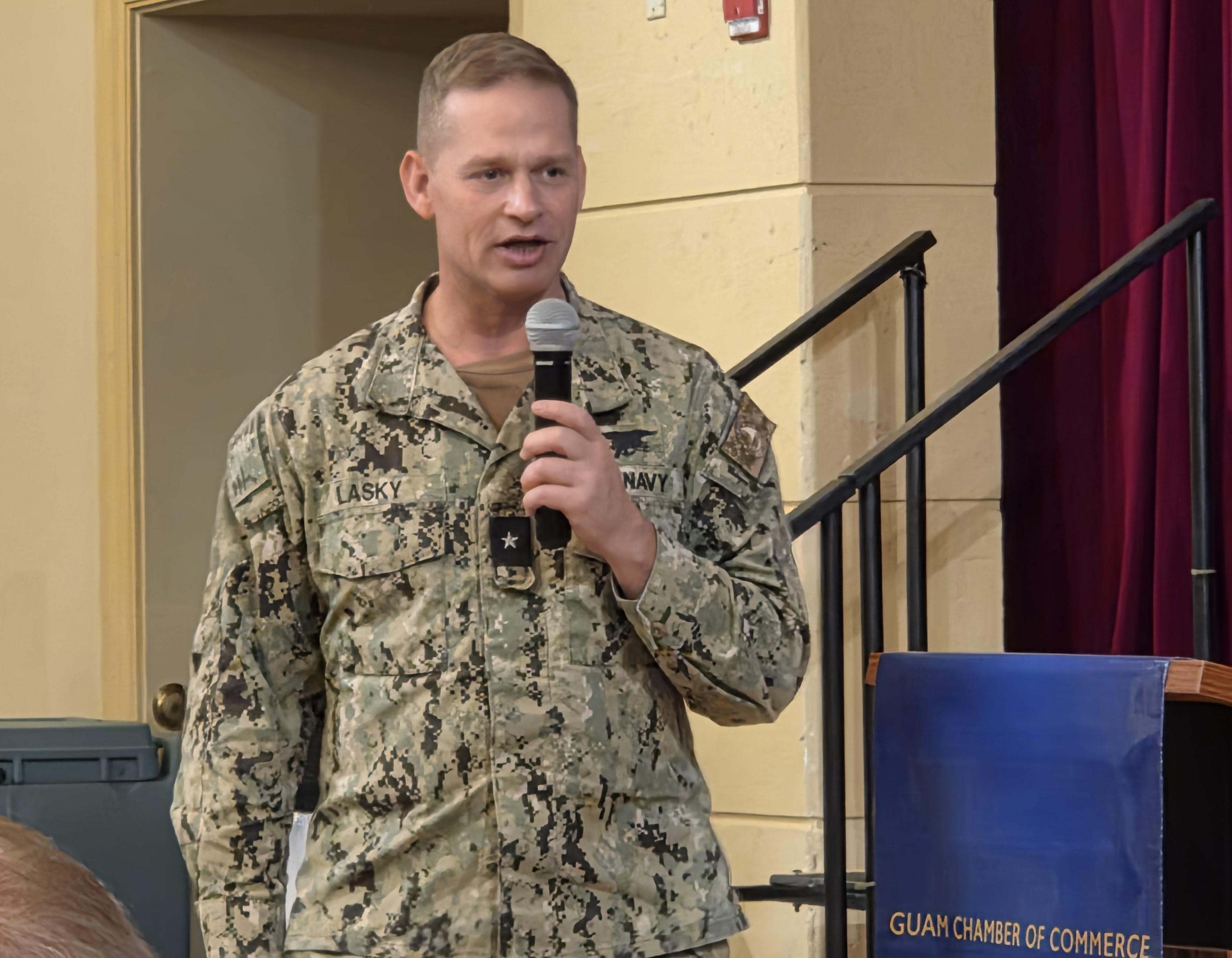
In response, Lasky acknowledged the shared infrastructure dependencies between military installations and the surrounding civilian communities. "One Guam isn't just an idea; it's a real thing," Lasky said. "There are dependencies between the installations and the local roads and utilities."
Lasky outlined the historical context of military personnel levels on the island, noting that active-duty numbers peaked at approximately 26,000 during the Vietnam War era before dropping to a low of nearly 3,000 in the early 2000s.
Current active-duty personnel on Guam stand at roughly 8,000, bringing the total military-connected population, including dependents and civilian employees, to approximately 20,000 people. Total military-connected presence could reach nearly 29,000 over the coming decade as planned defense initiatives proceed.
To help mitigate the impacts of defense expansion, Lasky noted that defense leaders recently joined officials from Guam and the NMI in San Francisco to present priority infrastructure and mitigation projects to federal interagency partners. Lasky reaffirmed that Joint Region Marianas and Joint Task Force — Micronesia will continue close coordination with local leaders to ensure utility grids, housing, and transportation networks remain capable of supporting both defense operations and the civilian population. mbj
Journal Staff
Guam remains the irreplaceable focal point of U.S. defense strategy in the Pacific, but military authorities are actively coordinating with local and federal partners to manage the strains that defense expansion places on civilian infrastructure, according to defense officials.
Speaking at the Guam Chamber of Commerce general membership meeting on Sept. 30 at the Hilton Guam Resort & Spa, Rear Adm. Joshua Lasky, commander of Joint Task Force — Micronesia, detailed the strategic posture of the region while addressing community growth and utility requirements.
"There is no other place on Earth where we could put Andersen Air Force Base and Naval Base Guam and meet the requirements of the mission," Lasky said, highlighting Guam's critical position along the second island chain. Joint Task Force — Micronesia serves as the primary joint defense coordinating authority across Guam, the Northern Mariana Islands, and the Freely Associated States.
The command's area of responsibility covers an ocean expanse comparable in scale to the contiguous U.S., encompassing more than 2,000 islands and 914 square miles of land.
Lasky noted that while operational responsibilities are extensive, headquarters staffing is expected to remain relatively lean at under 100 personnel. The primary operational mandate of the command remains strategic deterrence, Lasky explained. "When you're contemplating doing something to somebody else, and you evaluate for yourself that the cost of doing that will be unbearable, you don't do it," Lasky said. "That's the message we're trying to send."
During the meeting's open forum, local business leaders raised questions regarding the impact of incoming military personnel on local infrastructure and community resources.
Ray Donato, representative of Tropical LLC, pointed to long-term population projections and ongoing utility strains. "Infrastructure needs to be improved because we're going to see an increase of about 25,000 people to Guam in the next 10 years," Donato said, noting existing concerns over power, water, and traffic congestion.
In response, Lasky acknowledged the shared infrastructure dependencies between military installations and the surrounding civilian communities. "One Guam isn't just an idea; it's a real thing," Lasky said. "There are dependencies between the installations and the local roads and utilities."
Lasky outlined the historical context of military personnel levels on the island, noting that active-duty numbers peaked at approximately 26,000 during the Vietnam War era before dropping to a low of nearly 3,000 in the early 2000s.
Current active-duty personnel on Guam stand at roughly 8,000, bringing the total military-connected population, including dependents and civilian employees, to approximately 20,000 people. Total military-connected presence could reach nearly 29,000 over the coming decade as planned defense initiatives proceed.
To help mitigate the impacts of defense expansion, Lasky noted that defense leaders recently joined officials from Guam and the NMI in San Francisco to present priority infrastructure and mitigation projects to federal interagency partners. Lasky reaffirmed that Joint Region Marianas and Joint Task Force — Micronesia will continue close coordination with local leaders to ensure utility grids, housing, and transportation networks remain capable of supporting both defense operations and the civilian population. mbj