

















BY DANIEL M. PEREZ
Journal Staff
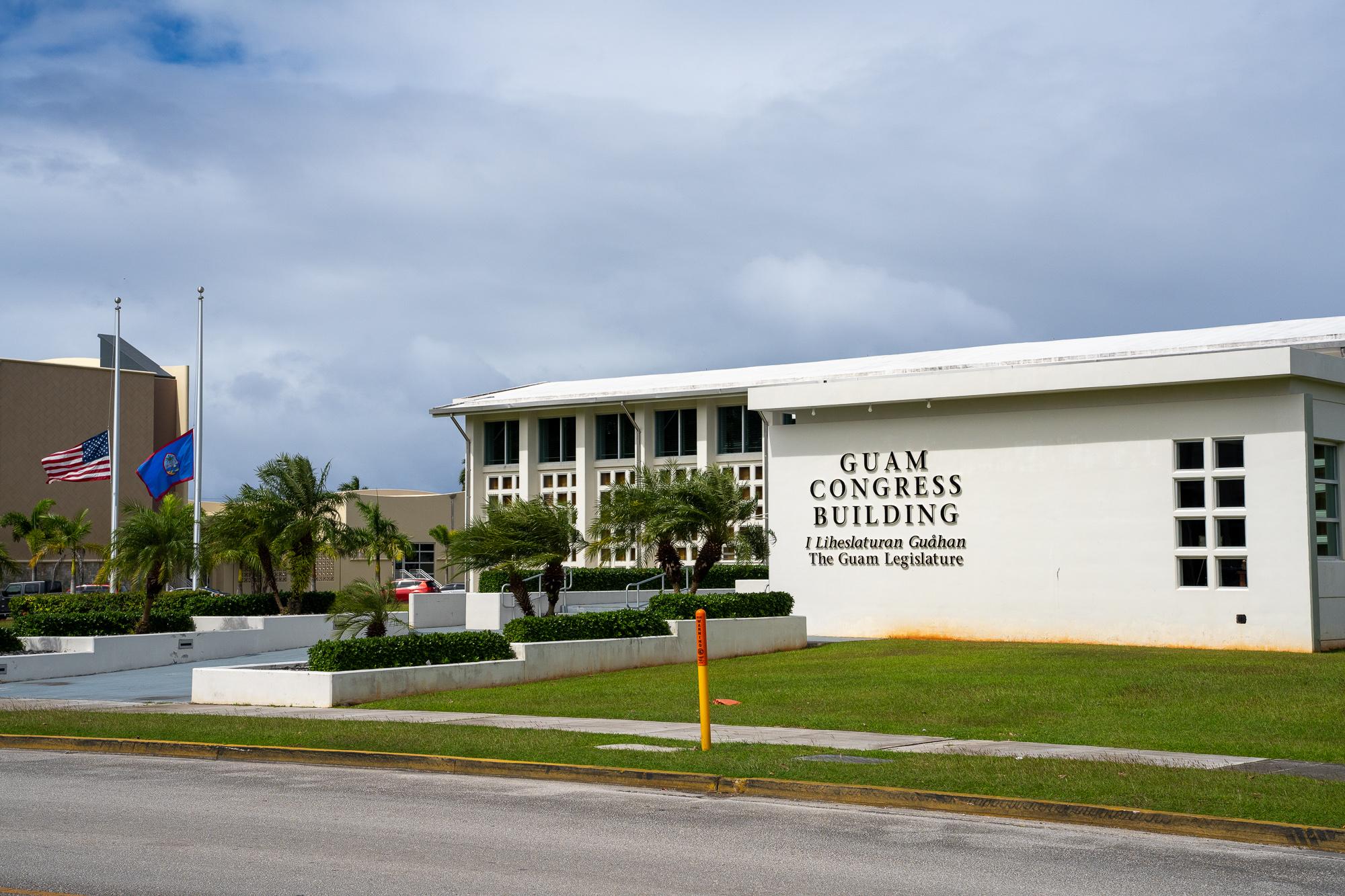
The 38th Guam Legislature drastically altered an executive funding proposal on Tuesday, stripping a four million dollar University of Guam initiative to funnel nearly $20 million in excess tax revenues entirely to the island’s only public hospital.
During the 11th Special Session, lawmakers passed an amended version of Bill 1 (11-S), which initially sought to divide $19,885,394 in Section 30 excess tax revenues. Gov. Lourdes A. Leon Guerrero originally proposed allocating $15.9 million to the Guam Memorial Hospital Authority for a new electronic health record system and four million dollars to the University of Guam for a Blue Economy Innovation Center at the Fadian Hatchery. Instead, the final measure appropriated 100% of the funds to the hospital.
The legislative change, introduced by speaker Frank Blas Jr., tied the funds to a fiscal 2027 budget law mandate. That existing law reserved the first $21 million in excess general fund revenues for hospital operations.
By legally defining the Section 30 funds as part of that excess, the amendment essentially merged the electronic health record funding with money already anticipated for daily hospital management. "As much as I know GMH needs this money, for either EHR or operations, fact of the matter is we are bound by the law that basically states the first $21 million goes to GMH," Blas said.
The consolidation of funds sparked immediate concern regarding the financial strain it could place on the healthcare facility.
Yukari Hechanova, chief financial officer of the Guam Memorial Hospital Authority, warned lawmakers about the consequences of diverting operational money to pay for the software upgrade. "It's going to be huge impact because that $21 million is going to go toward operations," Hechanova testified.
Sen. Sabrina Salas Matanane criticized the amendment for shortchanging the hospital and forcing an impossible choice. The reallocation also nullified her own pending legislation to modernize Simon Sanchez High School using the same revenue source. "GMH has maintained that they need the full $21 million for operations," Matanane said. "So now GMH is being told you can choose to spend this $19 million on an EHR or operations."
The measure ultimately passed with 11 votes in favor and three opposed. The bill was opposed by Matanane, and senators William Parkinson and Christopher Barnett.
Parkinson condemned the process, noting that his own proposal for energy credits was also sidelined by the sudden redirection of funds. "It is going to be hoovered up into the black hole that is the mismanaged GMH," Parkinson said. "If I was getting the feeling this money was actually going to be spent on an EHR, I could live with that, but there has been a great lack of transparency for how this process has gone down."
Lawmakers included additional oversight measures before finalizing the bill. Sen. Joe S. San Agustin, introduced a requirement for the hospital to submit a comprehensive report of all expenditures by Oct. 30, 2028, mandating that any unspent funds be returned one month prior. Additionally, Sen. Telo T. Taitague revised the legislative text to officially remove the university’s aquaculture center from the bill's intent. mbj
Journal Staff
The 38th Guam Legislature drastically altered an executive funding proposal on Tuesday, stripping a four million dollar University of Guam initiative to funnel nearly $20 million in excess tax revenues entirely to the island’s only public hospital.
During the 11th Special Session, lawmakers passed an amended version of Bill 1 (11-S), which initially sought to divide $19,885,394 in Section 30 excess tax revenues. Gov. Lourdes A. Leon Guerrero originally proposed allocating $15.9 million to the Guam Memorial Hospital Authority for a new electronic health record system and four million dollars to the University of Guam for a Blue Economy Innovation Center at the Fadian Hatchery. Instead, the final measure appropriated 100% of the funds to the hospital.
The legislative change, introduced by speaker Frank Blas Jr., tied the funds to a fiscal 2027 budget law mandate. That existing law reserved the first $21 million in excess general fund revenues for hospital operations.
By legally defining the Section 30 funds as part of that excess, the amendment essentially merged the electronic health record funding with money already anticipated for daily hospital management. "As much as I know GMH needs this money, for either EHR or operations, fact of the matter is we are bound by the law that basically states the first $21 million goes to GMH," Blas said.
The consolidation of funds sparked immediate concern regarding the financial strain it could place on the healthcare facility.
Yukari Hechanova, chief financial officer of the Guam Memorial Hospital Authority, warned lawmakers about the consequences of diverting operational money to pay for the software upgrade. "It's going to be huge impact because that $21 million is going to go toward operations," Hechanova testified.
Sen. Sabrina Salas Matanane criticized the amendment for shortchanging the hospital and forcing an impossible choice. The reallocation also nullified her own pending legislation to modernize Simon Sanchez High School using the same revenue source. "GMH has maintained that they need the full $21 million for operations," Matanane said. "So now GMH is being told you can choose to spend this $19 million on an EHR or operations."
The measure ultimately passed with 11 votes in favor and three opposed. The bill was opposed by Matanane, and senators William Parkinson and Christopher Barnett.
Parkinson condemned the process, noting that his own proposal for energy credits was also sidelined by the sudden redirection of funds. "It is going to be hoovered up into the black hole that is the mismanaged GMH," Parkinson said. "If I was getting the feeling this money was actually going to be spent on an EHR, I could live with that, but there has been a great lack of transparency for how this process has gone down."
Lawmakers included additional oversight measures before finalizing the bill. Sen. Joe S. San Agustin, introduced a requirement for the hospital to submit a comprehensive report of all expenditures by Oct. 30, 2028, mandating that any unspent funds be returned one month prior. Additionally, Sen. Telo T. Taitague revised the legislative text to officially remove the university’s aquaculture center from the bill's intent. mbj